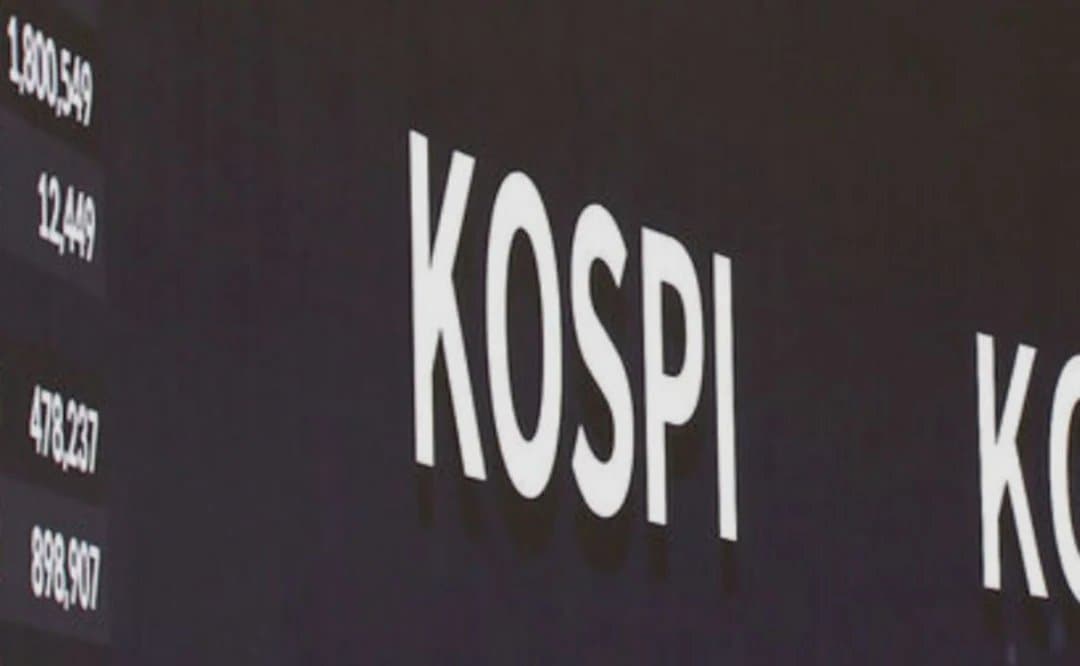
South Korea’s Kospi index plunged more than 9% on Tuesday, driven by a sharp sell-off in semiconductor stocks amid growing doubts over the durability of the artificial intelligence investment surge. The benchmark dropped to levels not seen since April, briefly hitting a 10.5% loss at 6,051.19 before trading restrictions kicked in.
The slide was largely led by major chipmakers Samsung Electronics and SK Hynix, whose shares fell roughly 12% and 12.7% respectively. With both companies making up a substantial portion of the Kospi’s market capitalization, their steep declines had an outsized effect on the index.
Rising Concerns Over Competition and Valuations
Investors have grown cautious about AI-linked equities after a period of rapid price growth fueled by heavy spending on data centers and advanced computing infrastructure. The question now is whether such investment levels and demand can be sustained over the long term. Adding pressure, Chinese semiconductor firms have ramped up production, threatening to erode profit margins and market share for established players.
A notable development fueling these fears came from Chinese memory chipmaker ChangXin Memory Technologies (CXMT), which saw its stock surge nearly 466% on its Shanghai debut. The company raised more than $8.6 billion in its IPO on the STAR Market, signaling a formidable new competitor in the DRAM market, traditionally dominated by Samsung, SK Hynix, and Micron.
The sell-off reverberated beyond South Korea. Japan’s Nikkei 225 slipped around 4%, Taiwan’s Taiex dropped 3.9%, and China’s Shanghai Composite and Hong Kong’s Hang Seng also declined, though more modestly. This wave of selling underlines how quickly investor confidence can shift with AI-related sectors, despite strong underlying demand for memory chips and computational hardware.
The pressure on SK Hynix shares highlights ongoing challenges for semiconductor firms in balancing high valuations with intensifying competition. Meanwhile, other Asian markets absorbed the ripple effects as investors reassessed risks tied to AI investments.