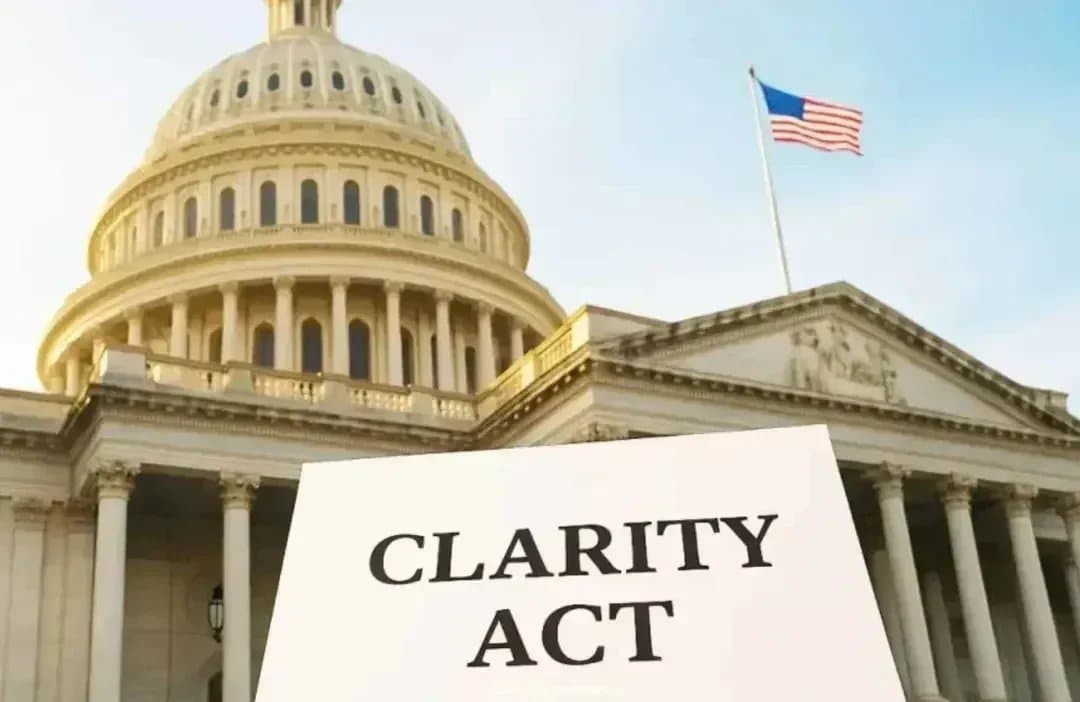
Senate Republicans have released an updated version of the CLARITY Act, and the crypto industry's reaction has been largely positive, with XRP holders and Ripple supporters in particular viewing the revised bill as a step toward the regulatory clarity they've been waiting years for.
The legislation keeps its core market structure provisions intact, including the framework that distinguishes digital assets from securities. That distinction matters enormously for XRP, which spent years in legal limbo after the SEC sued Ripple in 2020. A clearer statutory line between securities and digital commodities makes a repeat of that kind of regulatory ambiguity harder to engineer.
As former Fox Business journalist Eleanor Terrett noted, the revised bill also adds stronger consumer protections and new measures targeting crypto-related crime, without gutting the foundational rules the industry had already built around.
What the Bill Actually Changes
Beyond the securities classification question, the updated CLARITY Act addresses a few specific pain points. It reinforces self-custody rights, meaning individuals keep control of their own assets, and it explicitly prevents blockchain developers, validators, and infrastructure providers from being reclassified as financial intermediaries just because they support a decentralized network. For the XRP Ledger's developer community, that protection removes a real compliance headache.
The bill also tightens rules around customer funds at crypto exchanges, requiring clearer separation between user assets and company balance sheets. After the FTX collapse in 2022 and several smaller exchange failures that followed, that kind of structural safeguard has obvious appeal to retail and institutional participants alike.
The bipartisan stablecoin framework survives the revision mostly unchanged. That continuity is directly relevant to Ripple's RLUSD stablecoin, which the company has been pushing into cross-border payment corridors and institutional finance over the past year. Stable regulatory footing lets banks and payment providers commit to infrastructure investment rather than waiting out the next policy reversal.
The updated version does expand funding for crypto-focused law enforcement, including cybercrime units targeting illicit finance and hostile state actors. Some corners of the industry bristle at broader enforcement powers, but the prevailing read among compliant projects is that cleaner enforcement lines actually help legitimate businesses stand out from bad actors rather than being swept up alongside them.
This article is for informational purposes only and does not constitute financial or investment advice.