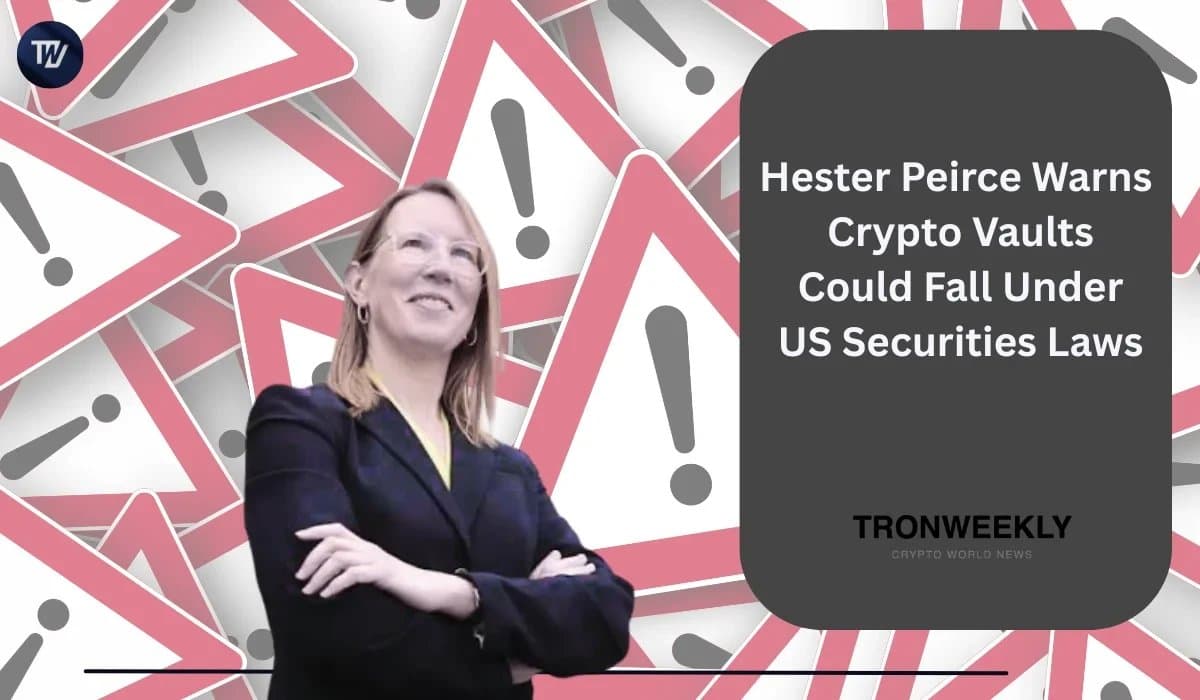
DeFi developers and asset managers running vault products may soon face SEC registration and disclosure requirements, depending on how those products are structured. That's the upshot of public remarks made this week by SEC Commissioner Hester Peirce, who said crypto vaults and onchain lending strategies could fall under existing U.S. securities laws.
Peirce was careful to frame her comments as personal views, not formal guidance. But the signal is hard to ignore, especially for protocols on Ethereum and Solana that pool user assets and generate yield automatically, with no human operator in the loop. "It depends on a specific vault or whether the structure and conduct of a particular lending strategy fall within the coverage of US securities laws," she said, adding that outcomes will be decided by "facts and circumstances" on a case-by-case basis.
Who's actually in the line of fire
The list is longer than it might first appear. DeFi protocol DAOs, independent asset managers, exchanges offering packaged yield products, custodying platforms, and funds tokenizing real-world credit all sit squarely in the scope Peirce described. Institutions exploring tokenized credit markets, which have grown sharply since 2024, are in the same boat.
Peirce also took a pointed jab at firms trying to engineer their way around compliance. She urged them to work with the SEC directly rather than doing, in her words, "headstands, backflips, and other gymnastics." That phrasing alone tells you the SEC is watching structuring maneuvers closely.
Context: enforcement history makes this more than talk
The SEC's interest in pooled lending products isn't new. A wave of enforcement actions against centralized crypto lenders in 2023 and 2024 already established that yield-bearing accounts can be treated as securities. Peirce's comments extend that logic into fully automated, onchain environments, where no central company is technically running the product.
That distinction, automated code versus a corporate issuer, has been the DeFi sector's main legal shield. Peirce's remarks suggest the SEC is not convinced that shield holds in every case. As the volume of tokenized real-world assets on public blockchains keeps climbing, regulators are actively stress-testing whether instruments written in the 1930s and 1940s can reach programmable finance in 2025. So far, the answer appears to be: sometimes yes.
This article is for informational purposes only and does not constitute financial or legal advice.