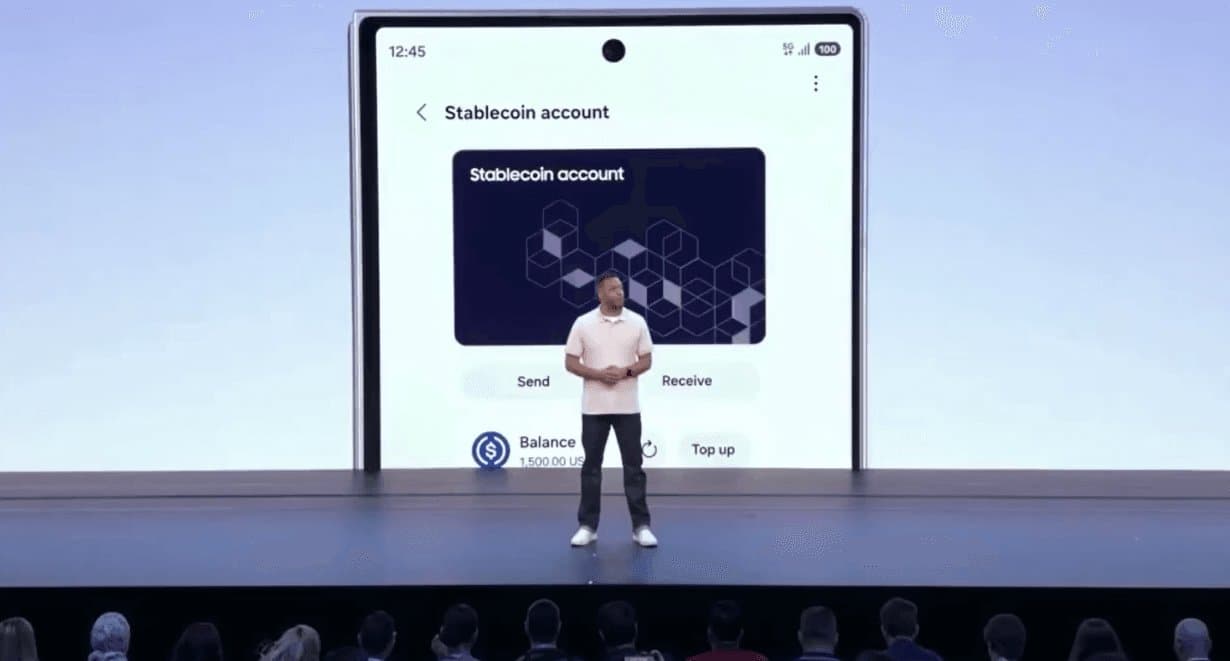
Imagine sending or receiving a digital dollar straight from your phone’s built-in wallet app. That’s exactly what Samsung hinted at during their Galaxy Unpacked 2026 event on July 22. They revealed plans to add stablecoins, digital currencies pegged to the US dollar, directly into the Samsung Wallet app already installed on millions of Galaxy devices worldwide.
This move could make Samsung one of the first major smartphone makers to natively support stablecoins. The company demonstrated a USDC account in action, showing off how users could send, receive, and top up funds within the wallet. However, Samsung didn’t disclose which stablecoin issuers they’re partnering with or when exactly users will get access to this feature.
Alongside this announcement, Samsung introduced the Galaxy Card in the US, created with Barclays and Visa. This card integrates tightly with Samsung Wallet and offers perks like 5% cashback at Samsung’s own stores. While the card is already launching, the stablecoin feature remains a promise for now a sign of where Samsung wants to head.
Samsung’s Galaxy phones are reportedly on about a billion devices globally, but the Wallet app itself is only active in 30 to 40 markets. The US, where the Galaxy Card is debuting, is likely to be the first region to see stablecoin support. Realistically, around 241 million Galaxy phones could access this feature in the near term, but no one can use it yet.
What sets this apart from Samsung’s previous crypto efforts is that stablecoins will be embedded right in the core wallet experience, not just linked through third-party apps. Back in 2019, Samsung added a cryptocurrency wallet to its Galaxy S10, and more recently partnered with Coinbase to facilitate Bitcoin purchases. But allowing users to handle a dollar-equivalent digital currency inside the native wallet is a bigger leap.
By folding stablecoins directly into Samsung Wallet, the company is aiming to build a more connected financial ecosystem across its devices and services, combining payments, rewards, and digital assets in one place.
Such integration could shift the space by providing easy, familiar access to digital dollars for hundreds of millions of users. Still, the rollout depends heavily on regulatory approvals across different countries, and Samsung hasn’t shared a detailed timeline yet.
This development follows a broader industry trend where digital assets are slowly becoming part of everyday financial tools, as seen in other innovations like Ethereum ETF inflows. Samsung’s push might just be the next big step in mainstream crypto adoption.