RLUSD Loses Ground as Massive Consortium-Backed Stablecoin Enters the Market
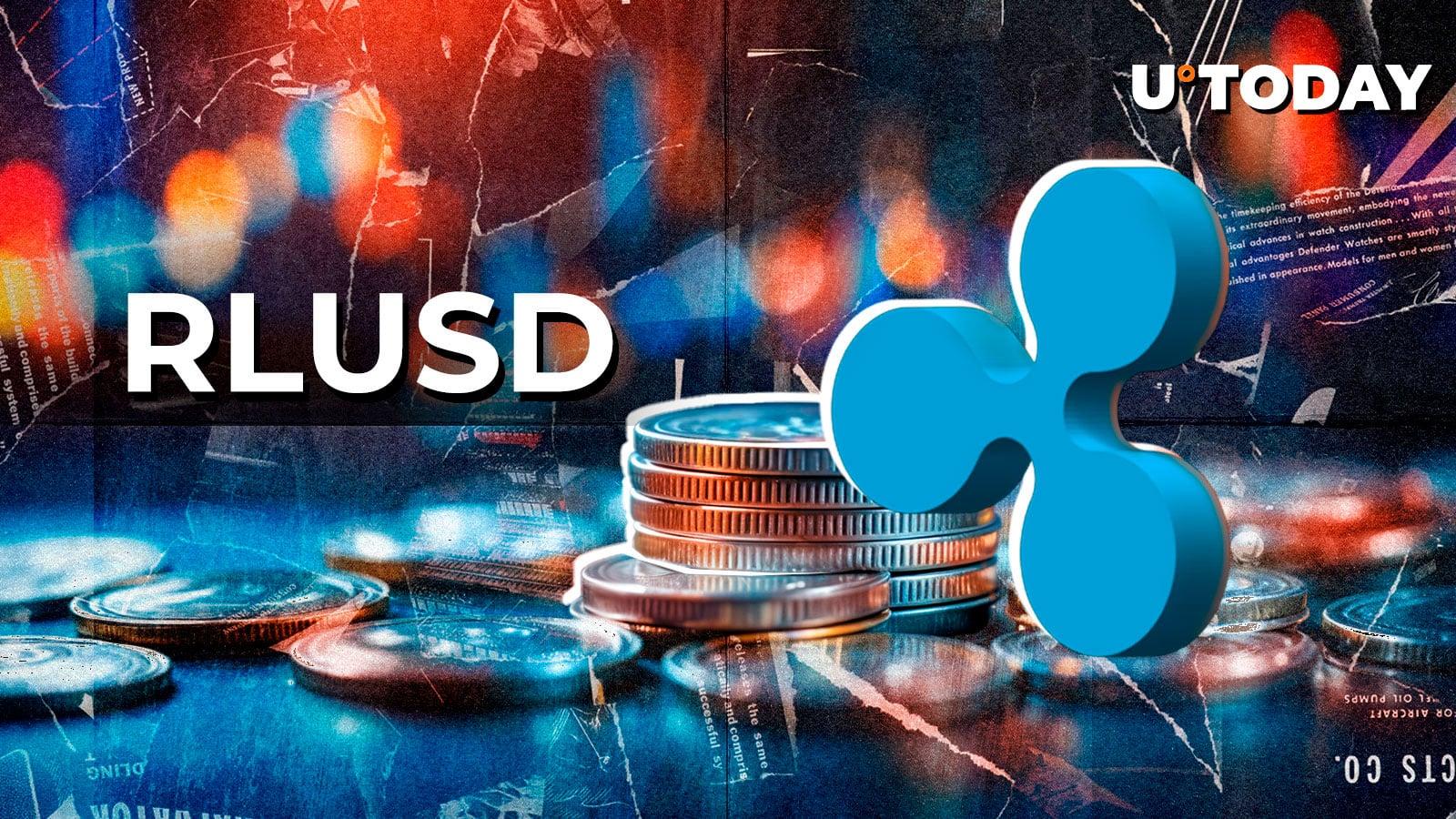
Ripple's RLUSD stablecoin has shrunk to a $1.4 billion market cap following a wave of large token burns, as the newly announced Open USD consortium — backed by BlackRock, Mastercard, Google, and over 140 others including Ripple itself — emerges as a major competitor.
Ripple's dollar-pegged stablecoin RLUSD is facing a notable contraction in its market presence, coinciding with the announcement of a powerful new competitor backed by over 140 major industry players.
According to on-chain blockchain data, a series of large RLUSD token burns occurred on the XRP Ledger (XRPL) on Tuesday, June 30. Approximately 146 million tokens were destroyed within just a few hours, pushing the stablecoin's total market capitalization down to roughly $1.4 billion, according to CoinGecko figures. For context, RLUSD previously reached a peak market cap of nearly $1.9 billion. The scale of the burns was large enough to shift the primary issuance network — Ethereum has now overtaken XRPL as the leading platform for RLUSD.
The timing of this contraction is notable. On the same day, the launch of Open USD (OUSD) was formally announced — a new USD-pegged stablecoin built on a shared governance model and backed by a consortium that includes household names like BlackRock, Mastercard, Google, Visa, and Stripe. Ripple itself confirmed it had joined the initiative as one of more than 140 participating financial, technology, and crypto organizations. OUSD will be governed by an independent body called the Open Standard organization, distinguishing it from other stablecoins currently on the market. The project aims to address long-standing challenges in the stablecoin space, including scalability, governance structures, and incentive alignment.
The news sparked immediate debate within the XRP community. Some participants viewed Ripple's involvement positively. X user @nietzbux argued that a truly neutral, consortium-backed stablecoin could broaden crypto adoption across the board and ultimately benefit XRP by expanding the overall market. Others were less optimistic about what this means for RLUSD specifically. Anodos CEO Panos Mekras pointed out that OUSD will directly compete with Ripple's own stablecoin, raising questions about RLUSD's long-term strategic positioning.
The ripple effects — no pun intended — extended beyond Ripple's ecosystem. Circle, the company behind USDC, saw its share price tumble more than 15% following the OUSD announcement. Circle had completed a high-profile IPO earlier in 2026, making the selloff particularly eye-catching. Analysts at William Blair, however, characterized the market reaction as an overreaction, noting that USDC's deeply embedded liquidity and established market position would be difficult for any new entrant to replicate quickly.
Circle CEO Jeremy Allaire responded publicly, emphasizing his company's commitment to building the best stablecoin infrastructure available. He framed the competitive landscape as a validation of stablecoins as one of the largest financial opportunities of the modern era, arguing that the transformation of internet-based money infrastructure ultimately benefits the entire space — Circle included.
The developments raise broader questions about the evolving stablecoin market structure. With major institutional players now coalescing around a single governance framework through OUSD, niche or proprietary stablecoins like RLUSD may face increasing pressure to differentiate or consolidate their use cases. Whether Ripple's participation in the OUSD consortium signals a strategic pivot away from RLUSD, or simply a hedge across multiple stablecoin ecosystems, remains to be seen.