Crypto promised anonymous payments. Open banking promised frictionless ones. Neither fully delivered, and somewhere in that gap, a 16-digit PIN you buy at a petrol station is still processing millions of transactions a year.
Paysafecard should, by any reasonable forecast from a decade ago, be dead. You walk into a corner shop, hand over cash, get a code printed on a slip of paper, and type it into a checkout field. That workflow predates smartphones. Yet the product is live in more than 50 countries, its user base runs into the tens of millions, and it keeps showing up in places the slicker rails quietly fail.
The blockchain privacy myth
Here is the detail that tends to surprise people who bought the early crypto pitch: a public blockchain records every transaction permanently, and chain-analysis firms have become very good at tracing pseudonymous wallets. The average holder assumes far more privacy than they actually have. A paysafecard voucher bought with cash and redeemed once leaves no such record. No wallet address, no on-chain history, no link to a name or a bank. On the narrow question of payment privacy, the low-tech option beats the high-tech one. That is not a small irony.
The company behind the product is regulated, which matters. Paysafecard is issued by a Paysafe group entity authorised as an e-money institution by the UK's Financial Conduct Authority. That means the float sitting behind your voucher is subject to safeguarding rules, not parked in an unregulated pool. It is worth treating the provider's own headline user figures as marketing numbers rather than audited data, but the regulatory structure is verifiable.
Three things digital rails still get wrong
Access is the first. Tens of millions of adults in Europe and North America have no debit card, a suspended one, or simply no appetite to link banking credentials to every site they use. A prepaid voucher converts cash directly into online purchasing power. For younger users who are not yet banked, or anyone rebuilding after financial difficulty, that conversion is not a workaround. It is the only route.
Privacy is the second. When you pay with a card or through open banking, the merchant collects data at the payment layer. Patterns accumulate. A PIN code bought for cash carries no name, no account number, no address. The merchant gets confirmation the code is valid and the value is there. Nothing else. In a payment landscape where almost every transaction quietly builds a profile, that is genuinely rare.
Control is the third, and probably the most underrated. The voucher has a fixed value. You cannot overdraw it, extend it, or accidentally spend past it. There is no prompt to top up, no credit line lurking underneath. For anyone who wants a hard ceiling on discretionary spending, that constraint is exactly the point.
The mechanics are simple by design
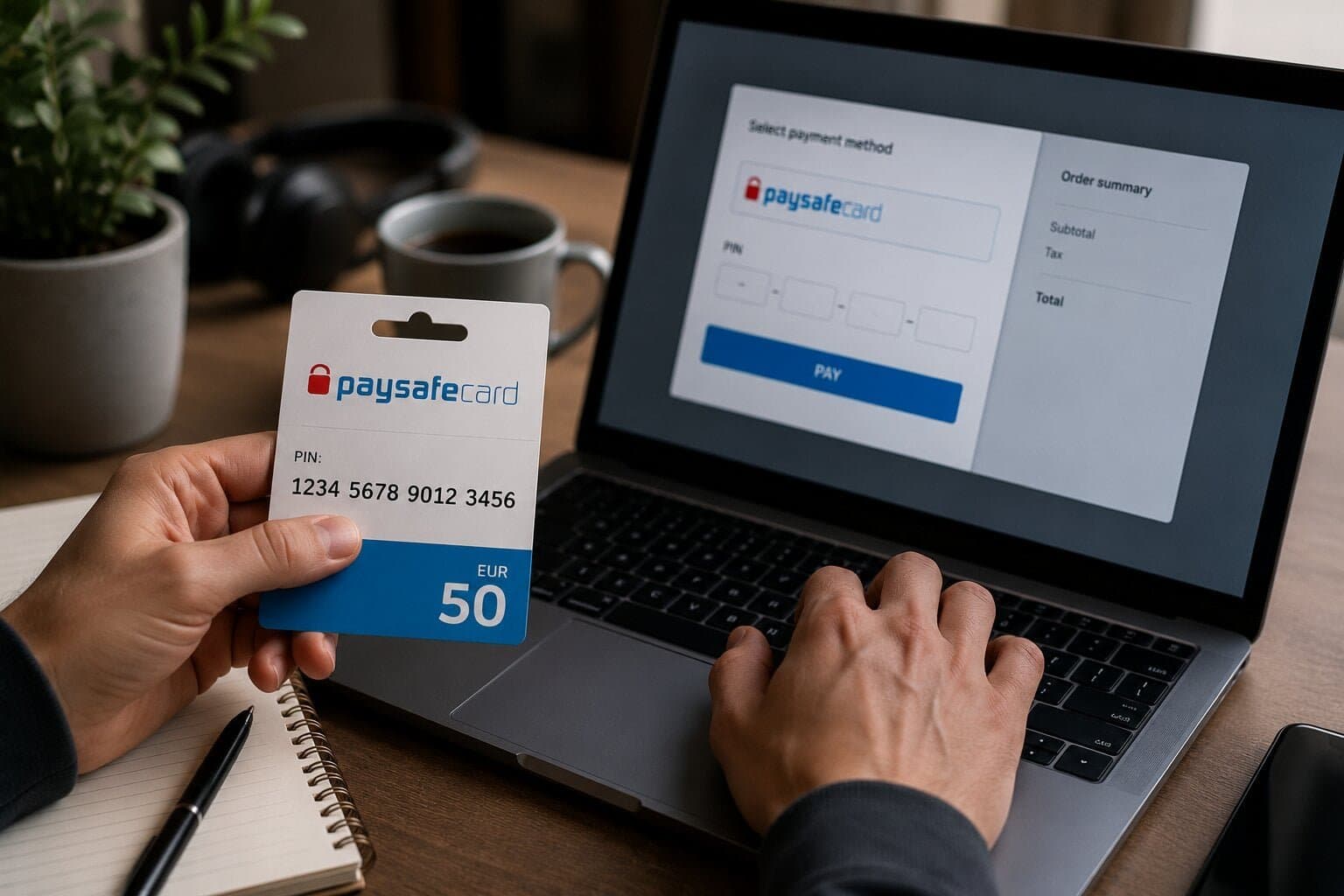
You buy in fixed denominations, at a shop, kiosk, or online. You receive a 16-digit PIN. At checkout, you enter the PIN and the value draws down. No stored card number, no login, nothing connected to a current account. When the balance hits zero, the voucher is done.
That deliberate simplicity is why the product keeps finding users in 2026. Fast digital rails are excellent at what they do. They are less good at serving people who want a firm spending limit, no data trail, and no bank account in the picture at all. Paysafecard is not competing with crypto or open banking on speed. It is filling a different need entirely, one that turns out to be more durable than most fintech forecasters expected.
This article is for informational purposes only and does not constitute financial advice. Always do your own research before making payment or financial decisions.