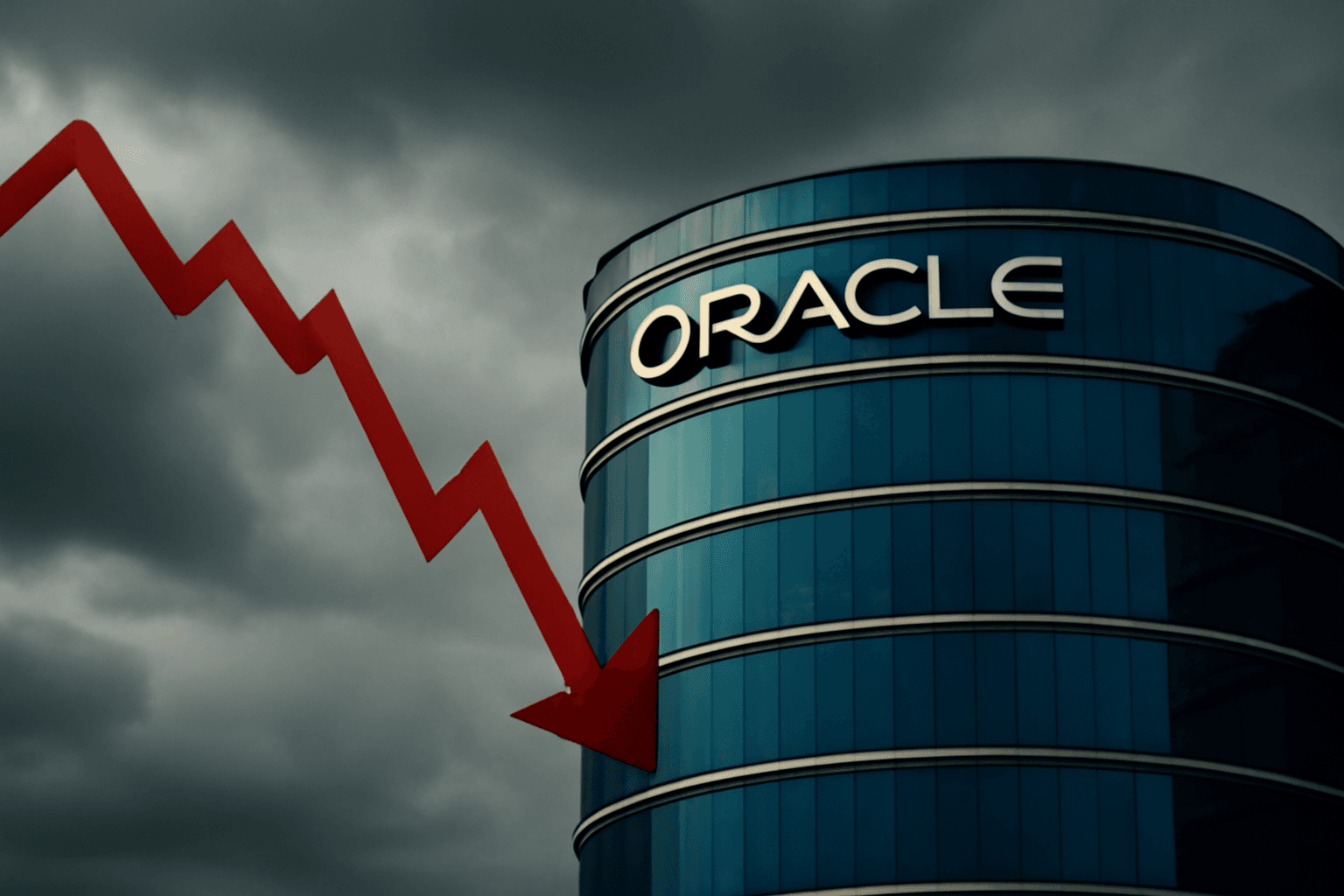
Larry Ellison is roughly $213 billion poorer than he was at Oracle's peak. Shares of ORCL hit $119.89 on Thursday, a 52-week low and a drop of more than 50% from the high of $345.72 reached not long ago. Prices haven't been this low since April 2025.
The Spending Bet That Spooked the Market
The selloff has one clear trigger: Oracle is pouring money into AI data center infrastructure faster than investors are comfortable with. Capital expenditures jumped from roughly $7 billion in fiscal 2025 to $21 billion in fiscal 2026, and management is guiding for over $25 billion in fiscal 2027. That kind of acceleration, funded largely by debt, is exactly what rattled S&P Global enough to cut Oracle's credit rating to BBB-, one notch above junk. Higher borrowing costs on top of a capital-intensive buildout is a painful combination.
Research firm CLSA launched coverage with a Hold and a $145 target, warning that Oracle may need up to $500 billion in total capital to hit its 2030 targets. On top of that, the company could be required to post more than $7 billion in collateral for a Wisconsin data center project after the state's utility commission applied strict credit standards to protect consumers from rising power costs. As America's biggest cloud firms burn through cash at record pace, Oracle's situation is an extreme version of an industry-wide tension between AI ambition and balance sheet discipline.
What the Bulls Are Holding Onto
The bear case is real, but it isn't the whole picture. Oracle's remaining performance obligations, essentially its locked-in revenue backlog, reached an all-time high of $638 billion as of May 31, 2026. That number suggests demand for Oracle Cloud Infrastructure is not the problem. Customers are signing contracts. The question is whether the infrastructure to serve them gets built on time and at a manageable cost.
Oracle has also chosen to work alongside AWS, Azure, and Google Cloud rather than compete head-on, a positioning that gives it access to multi-cloud enterprise deals that pure-play rivals can't easily capture. Guggenheim kept its Buy rating and a $400 price target after the drop, and 20 analysts raised their earnings forecasts. The gap between that $400 target and today's $119.89 price tells you how wide the disagreement is right now.
At current levels, ORCL trades at a steep discount to where most bulls think fair value sits. Whether the backlog converts to cash fast enough to cover the debt load is the bet investors are being asked to make.
This article is for informational purposes only and does not constitute financial advice or a recommendation to buy or sell any security.