Is Tokenization Stalling? Insights on Liquidity and Market Structure
A recent report highlights liquidity issues in the tokenization market, raising questions about its structural integrity and future growth potential.
A recent report by BeInCrypto Intelligence, leveraging data from RWA.xyz, has shed light on the current state of tokenization within the real-world asset (RWA) sector. Valued at approximately $60 billion and comprising over 7,000 products across 12 asset classes, this emerging market shows promise yet remains relatively narrow in its scope.
Concentration of Value in the Tokenized Market
One of the most striking findings highlights a significant concentration of value, with just 62 assets accounting for a staggering 88% of the total market valuation. Dominating this landscape are five key products: Figure HELOC, Circle USYC, Tether Gold, BlackRock BUIDL, and Justoken JMWH, which collectively represent around half of the entire market. Such concentration raises essential questions about market resilience and investor diversification strategies.
Liquidity Concerns and Accessibility Challenges
Despite the apparent growth, liquidity remains a critical concern. Among the 1,289 tokenized assets valued over $100,000, 910 assets worth $32.9 billion have recorded zero weekly transfers, indicating a lack of active trading that may deter potential investors. Additionally, accessibility issues persist, with a staggering 97% of the market being outside the reach of US retail investors, leaving only $1.7 billion legally available for investment within this demographic.
This situation highlights an essential dichotomy in the tokenization space. Although tokenized stocks are expanding in number, a significant 59% of these tokens offer synthetic price exposure as opposed to genuine ownership of underlying shares. This setup may lead to a misunderstanding of asset liquidity and could further complicate the investment landscape for retail participants.
Industry Insights and Future Directions
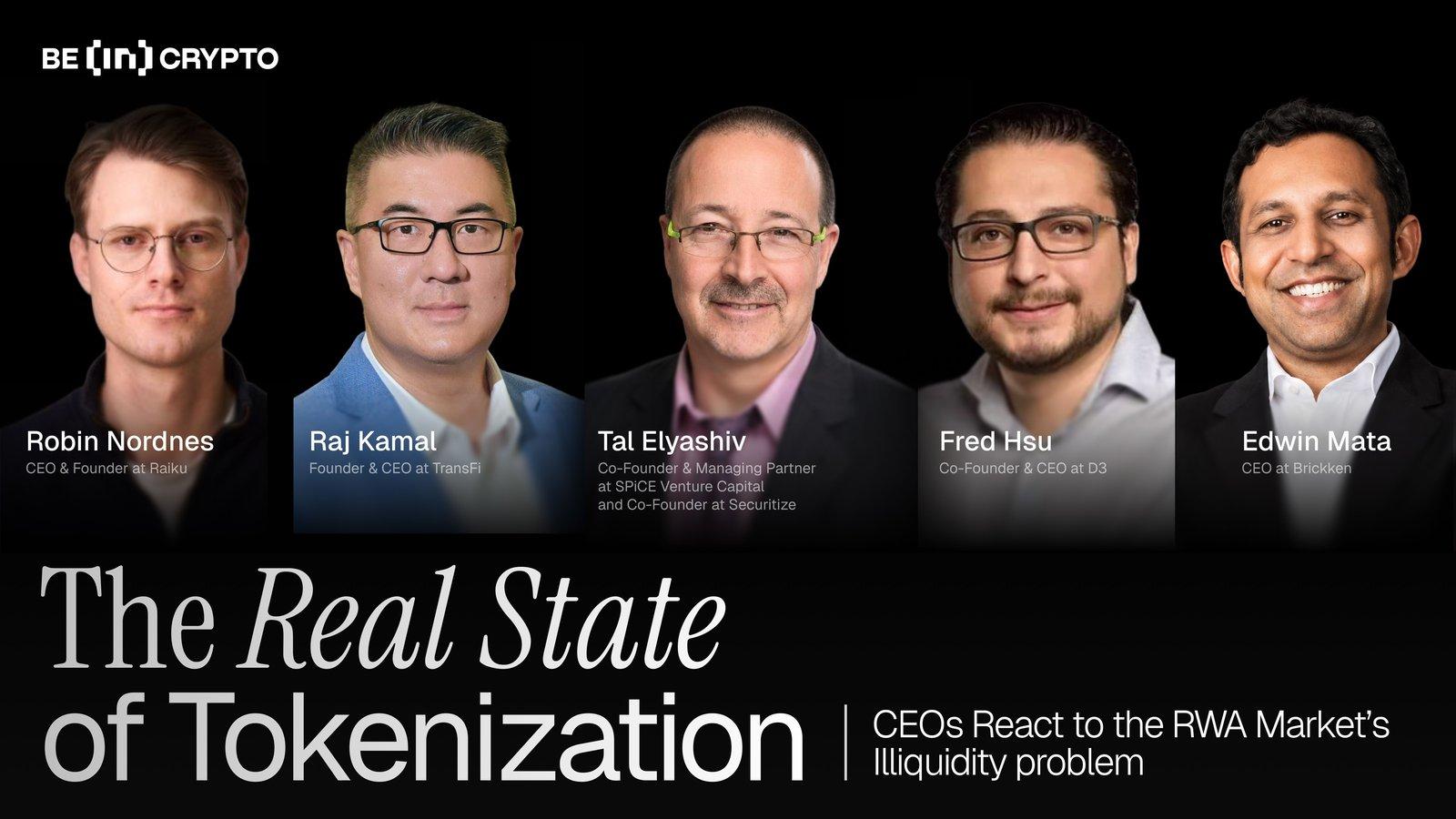
To understand the implications of these findings, BeInCrypto consulted several industry experts. Tal Elyashiv, Co-Founder of Securitize, emphasized the importance of full ownership in the tokenization process, arguing that tokenization should begin at the source to address structural challenges effectively. He noted that low transfer activity should not automatically be viewed as a failure, as many initial tokenized products aimed at institutional compliance rather than retail trading.
This perspective indicates that the current liquidity issues might be less about market failure and more about the nascent stage of infrastructure development. Elyashiv posits that resilience in the previous phase, alongside greater regulatory clarity, is essential for the sector's future success in broader public trading.
Similar sentiments were echoed by Robin Nordnes, CEO of Raiku, who pointed out that activity levels depend significantly on predictable execution within tokenized platforms. As the market evolves, addressing both structural and operational challenges will be crucial to unlock the full potential of tokenized assets.