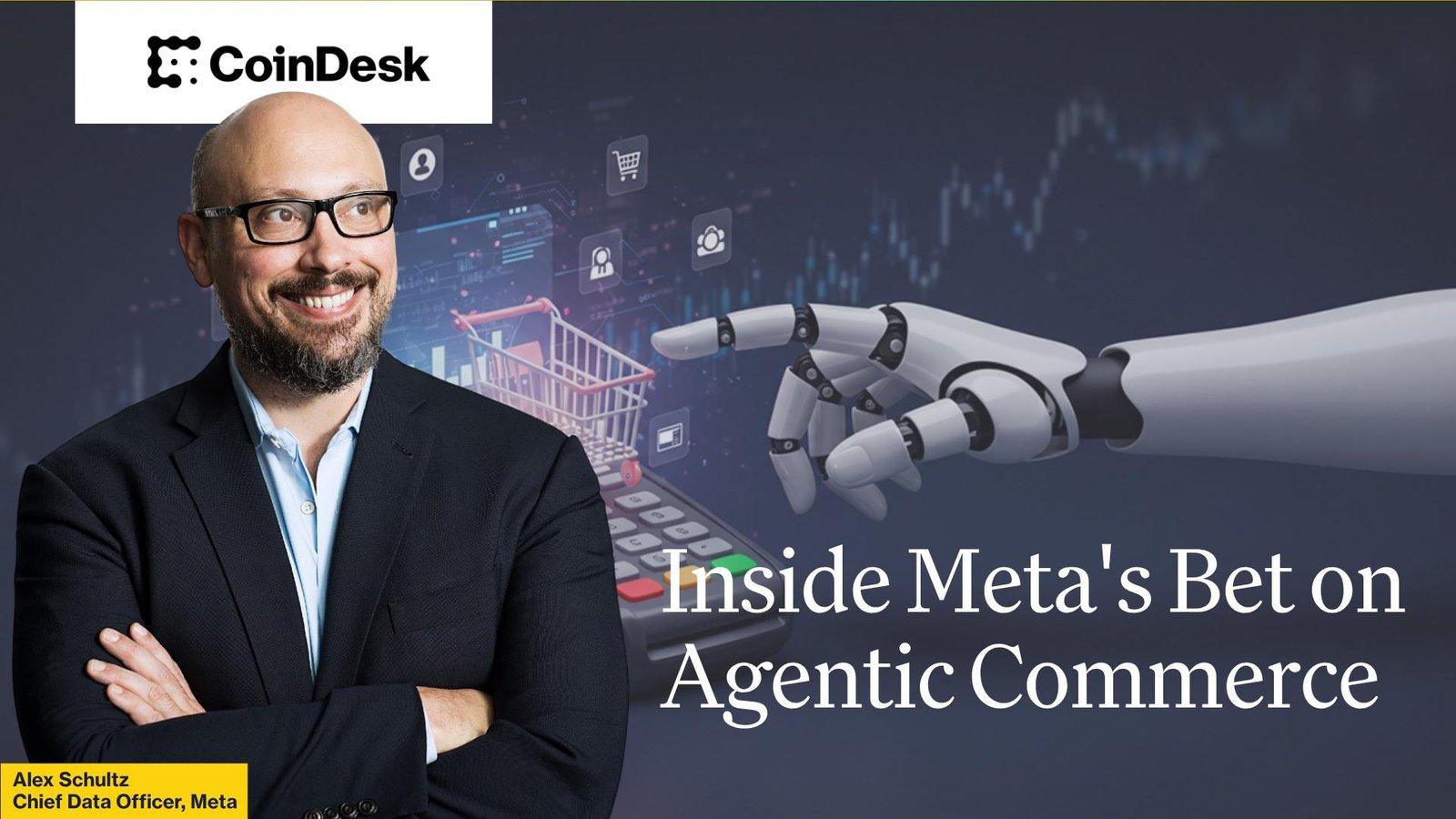
In a significant discussion on CoinDesk Spotlight, Alex Schultz, Chief Data Officer at Meta, posits that agentic commerce is not merely an innovation; it represents the next logical evolution of business. The concept encapsulates a market where AI-driven business agents facilitate transactions and logistics in a manner unprecedented in today's digital environment.
Schultz draws a parallel to sci-fi author William Gibson's notion of a future that is already present yet not fully embraced by society. He cites over a million active businesses utilizing Meta's agents on a weekly basis, demonstrating rapid adoption from virtually no baseline at the year's start. This presents a compelling case for businesses: the ability to delegate everyday tasks, such as organizing a child's birthday party, to AI interfaces can scale to more complex negotiations and financial transactions.
Stablecoins as the Backbone of Future Commerce
A crucial aspect of this vision involves the implementation of stablecoins as a primary payment layer. Schultz dismisses the relevance of physical wallets in contemporary commerce, insisting that the future lies in seamless digital transactions. He cites successful examples from Asia, particularly WeChat and Line, both of which have pioneered conversational commerce and digital payments, showing what is possible on a larger scale.
For U.S. consumers, Schultz critiques the prevailing reliance on iMessage, branding it as outdated against the more versatile platforms popular in other regions. He emphasizes the ongoing success of WhatsApp for business transactions in Brazil and India, where small enterprises thrive through conversational interfaces. The growth trajectory of conversational commerce is supported by forecasts from sources like Fortune Business Insights, predicting an expansion to $39.53 billion by 2034, propelled largely by artificial intelligence.
Implications for the Global Business Landscape
Schultz's remarks on the seventh anniversary of Facebook's Libra reveal a deeper understanding of market dynamics and regulatory challenges. His humorous comment about potentially inciting government concerns underscores the intricate balance between innovation and compliance in digital finance. Meta's plans not only suggest a transformative shift in consumer behavior but also signal potential disruptions in established payment systems.
As businesses navigate this new landscape, the speed with which agentic commerce and stablecoins gain traction could redefine commerce as we know it. Over time, this could lead to decreased reliance on traditional banking methods, prompting stakeholders to reconsider their strategies in alignment with evolving consumer preferences.
This material is for informational purposes only and should not be considered financial advice.