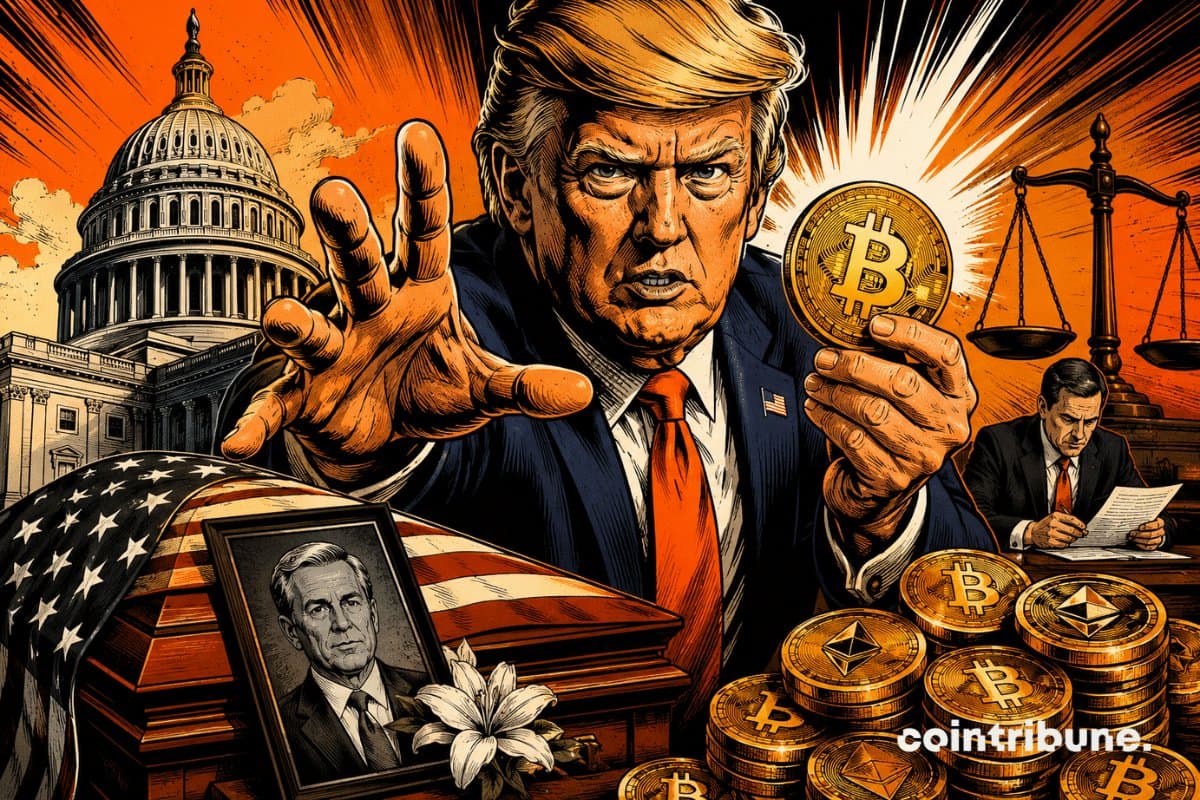
With the recent passing of Senator Lindsey Graham, the dynamics surrounding the CLARITY Act and broader crypto regulation in the U.S. have become increasingly complex. Graham, who died at 71, leaves a Republican majority in the Senate that has recently dwindled to 51 seats, which now faces the challenge of garnering sufficient support to pass the critical legislation designed to clarify the regulatory framework for digital assets.
Trump's Appeal and Its Implications
On the day following Graham's death, Donald Trump took to Truth Social, urging the Senate to back the CLARITY Act in honor of Graham. This call is particularly significant as the Republican party finds themselves needing the backing of at least nine Democratic senators to reach the required 60 votes for passage. Traditionally, bipartisan support is seen as a necessity for legislation of this magnitude, and Trump's appeal throws a spotlight on the intricate dance between party lines and legislative urgency.
Currently, there is skepticism surrounding Graham's commitment to the CLARITY Act. Historical records indicate he did not participate in the necessary committees nor did he vote on this specific legislation. Given this discrepancy, questions arise: Is Trump's invocation of Graham's name a strategic move that could unite Republicans and draw Democrats into the fold, or is it a symbolic gesture that lacks substantial backing?
Deadline Approaches for Legislative Action
The urgency for the Senate to act is compounded by the impending summer recess scheduled for August 7, leaving them with only eight legislative days. A merged version of the CLARITY Act is anticipated to be unveiled soon, with a targeted vote planned for July 20. The stakes are high, not just for the Republican party but for the entire cryptocurrency industry, which awaits clearer regulatory definitions before making significant moves. The lack of clear legislation has resulted in a cautious approach among investors, leading to volatility.
Additionally, five Democratic senators have called for an audit of Trump's 2025 asset declaration, which includes a reported $1.4 billion in crypto-related income. This scrutiny further complicates the political landscape, as trust and credibility become paramount in negotiations over the CLARITY Act.
This material is for informational purposes only and is not financial advice.