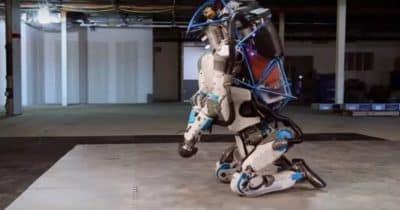
During the recent FIFA World Cup Round of 16 match between Brazil and Norway, a five-foot humanoid robot named Atlas made its entrance onto the pitch at the New York/New Jersey Stadium. This historic moment, where Atlas performed goal celebrations and handed the match ball to the referee in front of an impressive live audience and a large global TV viewership, marked a significant milestone in the integration of robotics into mainstream culture.
The Intersection of Robotics and Corporate Strategy
Atlas, developed by Boston Dynamics and owned primarily by Hyundai Motor Group, represents a strategic shift for the automaker, positioning itself beyond traditional automotive limits into the realms of robotics and mobility. This aligns with Hyundai’s broader marketing campaign as FIFA's official automotive partner, showcasing its commitment to highlighting the innovative capabilities of robots in high-profile settings. Notably, Atlas demonstrated complex soccer maneuvers, some of which were derived from reinforcement learning algorithms that processed live World Cup footage.
Moreover, Boston Dynamics' other creation, the Spot robot, also made an appearance, further emphasizing the company's integration of robotics into major entertainment events. However, it is crucial to recognize that this collaboration does not intersect with the cryptocurrency domain, highlighting an essential divide between two rapidly evolving sectors.
Implications for Crypto Investors
While there is a notable absence of any blockchain tokens or cryptocurrency initiatives linked to this robotic spectacle, investors in the crypto market should take note of the broader implications. The AI and robotics industries are gaining traction, raising the question of how decentralized projects might leverage these technological advancements in marketing, logistics, or product innovation. As seen in other sectors, the intersection of AI and blockchain could unlock new avenues for investment, offering decentralization solutions for datasets and computational needs.
Hyundai’s approach to using a prestigious event like the World Cup for branding reflects an understanding of how emerging technologies can shift market perceptions. Similar to Tesla's ambitions with its Optimus project, Hyundai’s rebranding effort might ignite interest in robotics while simultaneously challenging investors to consider how cryptocurrency can intersect with these innovations.
Why the Robotics-Crypto Nexus Matters
For cryptocurrency enthusiasts, the challenge remains: will blockchain technology find a foothold within the AI and robotics landscapes? With emerging platforms like Render and Akash, as well as tokens such as FET and TAO, the shift toward AI-centric developments presents potential for tight integration with cryptocurrency solutions. As companies like Hyundai innovate and redefine their roles within the market, investors should remain attentive to opportunities that may arise at the convergence of robotics, AI, and blockchain technology.