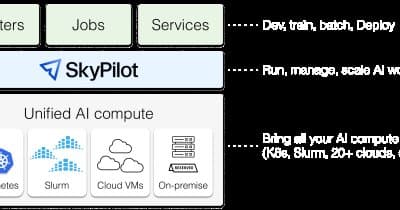
Ion Stoica, cofounder of Databricks, has launched SkyPilot with a fresh $20 million funding round to address the costly and complex problem of cloud vendor lock-in for AI workloads. SkyPilot aims to enable companies to manage AI compute resources smoothly across multiple cloud providers, including AWS, Google Cloud, and Azure.
Breaking Vendor Lock-In in AI Compute
The startup evolved from UC Berkeley’s Sky Computing Lab, where Stoica and cofounder Zongheng Yang developed the core framework as an open-source project, presented at NSDI 2023. Their approach, named "sky computing," offers a unified resource pool from disparate cloud providers. This allows workloads to dynamically migrate to the cloud environment with the lowest cost or highest availability, addressing the expense and inflexibility that typically bind AI workloads to a single provider.
SkyPilot’s technology automatically handles failover and optimizes usage of spot instances discounted compute capacity sold by providers during surplus periods. This automation minimizes downtime and manual intervention when workloads move between clouds, which is critical for AI applications where continuous availability matters.
By mid-2026, SkyPilot had integrated with Nebius AI Cloud and expanded partnerships with Runpod and AMD hardware. Such collaborations indicate an emerging ecosystem around multi-cloud compute orchestration, which could disrupt how enterprises approach cloud contracts and capacity planning.
Implications for AI Investors and Market Dynamics
Transitioning from academia to commercialization, SkyPilot follows Stoica’s proven path, echoing his previous ventures like Databricks and Anyscale. The $20 million raise signals investor confidence in cloud-agnostic compute orchestration a market that grows as AI workloads scale and diversify.
However, entrenched cloud providers have incentives to maintain ecosystem lock-in, creating a competitive headwind. AWS, Google, and Microsoft are unlikely to facilitate interoperability that eases workload migration away from their platforms. SkyPilot’s success depends on overcoming this resistance and proving cost and performance benefits to enterprise customers.
This startup’s approach might reshape cloud compute procurement strategies, giving enterprises agility to navigate fluctuating prices and capacity across cloud vendors. That flexibility can lower operational costs and reduce risk of outages or vendor-specific bottlenecks, a vital consideration as AI adoption accelerates.
This content is informational and does not constitute financial advice.