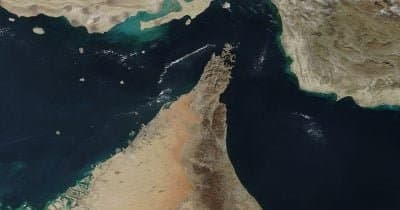
The United States has conducted airstrikes against Iranian military facilities for ten consecutive nights targeting key sites on Qeshm Island, Bandar Abbas, and Bushehr. These operations, known as Operation Epic Fury, aim to degrade Iran’s military presence near the Strait of Hormuz, a globally critical chokepoint for energy transportation. The sustained nature of these strikes signals a significant escalation following the collapse of a mid-June truce, with clear implications for regional stability and international energy markets.
Heightened Military Tensions and Market Responses
Iran has responded with attacks on U.S. bases in Bahrain and Kuwait, while also being linked to fires on commercial tankers within the Strait of Hormuz itself. This tit-for-tat dynamic raises the prospect of Iran enforcing a full airspace closure. Markets have taken note: prediction models currently price the probability of an Iranian airspace shutdown by the end of August at 46.5%, reflecting growing investor concern over supply chain disruptions and geopolitical risk.
Monitoring Indicators and Potential Spillover
Key signals to watch include announcements from the Civil Aviation Organization of Iran (CAOI) and Iranian State Television (IRIB), which would confirm movement towards a complete airspace closure. An official Notice to Airmen (NOTAM) or government statement would likely trigger sharp market reactions, particularly in oil and shipping sectors dependent on the Strait’s accessibility. The situation shows how military escalation can swiftly translate into substantial economic consequences, underscoring the vulnerability of global supply lines to geopolitical flashpoints.
Increased volatility in the region also poses risks for broader asset classes, potentially affecting investor confidence in Middle East energy-linked securities. These unfolding developments serve as a reminder that conflict dynamics around strategic global nodes like the Strait of Hormuz directly feed into macro trading and adoption patterns in related markets.
material is informational, not financial advice