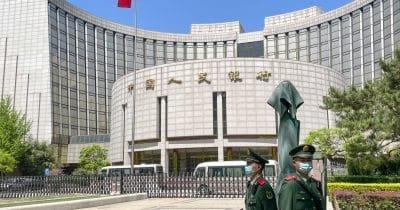
The People's Bank of China (PBOC) has taken significant steps to maintain liquidity in its financial system, evidenced by a recent 7 billion yuan injection through 7-day reverse repurchase agreements at a historically low interest rate of 1.40%. However, the implications of this action extend beyond immediate liquidity support, showcasing a strategic shift in monetary policy that investors need to understand.
Understanding the New Overnight Repo Facility
On June 29, 2026, the PBOC introduced a new overnight reverse repo facility, initially injecting a substantial 300 billion yuan at an even lower rate of 1.25%. Over the next couple of days, it followed up with an impressive 600 billion yuan, pushing nearly a trillion yuan into the system within a span of 48 hours. This quick deployment of liquidity highlights the central bank's proactive approach in stabilizing financial markets during periods of typical stress, such as quarter-end and month-end liquidity constraints.
The Impact on Money Markets and Risk Assets
The overnight interbank repo transactions now dominate over 80% of China's money market turnover, indicating the PBOC's strategic move to gain more direct control over this segment. Going forward, if the PBOC consistently maintains the overnight rate at 1.25%, it could establish a new lower floor for short-term rates, thereby affecting the overall funding landscape. A significant 15-basis-point gap between overnight and 7-day rates might become compressed, leading to a lower interest rate environment without necessitating formal changes in policy rates.
Future Implications for Traders and Investors
Market participants should closely monitor these developments, especially as the PBOC has also scheduled a 1-trillion-yuan outright reverse repo operation for July 6, 2026. This action is part of a broader strategy to ensure adequate liquidity, not just to meet regulatory requirements but also to support economic activity during the summer months. As liquidity conditions stabilize, risk assets may receive favorable attention from investors, reinforcing the importance of understanding the PBOC's monetary maneuvers.
In summary, the PBOC's recent liquidity interventions and the introduction of the overnight repo facility point towards a concerted effort to reshape the dynamics of China's money market. As market participants adjust to these changes, traders and investors should remain vigilant, as the resulting lower short-term funding rates could trigger shifts in market behavior across various asset classes.