Nvidia's ambitions transcend its role as a mere chip supplier; the company aims to establish a foothold in the energy sector that fuels its most significant AI initiatives. Currently, Nvidia, alongside several tech giants, is in advanced discussions to acquire a minority stake in Lancium, a Texas-based power infrastructure developer.
This potential deal values Lancium between $7 billion and $10 billion, with some estimates soaring as high as $14 billion. Such an investment signifies a strategic pivot in how tech companies perceive their participation in AI infrastructure not merely through hardware, but through the critical power frameworks that enable their operations.
Evolution from Bitcoin Mining to Power Management
Lancium began its journey focusing on Bitcoin mining while harnessing Texas's renewable energy surplus. The firm's innovative approach aimed to optimize energy use during off-peak times, creating an elegant solution to the volatility associated with grid demands. Their proprietary “Smart Response” technology effectively bridges the needs of data centers and power grids, allowing for responsive energy management.
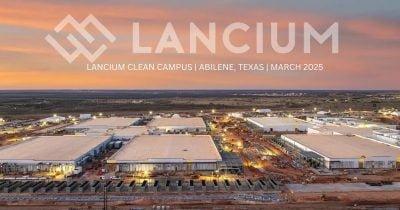
With a vision to extend these capabilities, Lancium now offers large-scale “Clean Campuses,” targeting AI workloads that require immense energy support. Just the Abilene Clean Campus, its flagship facility, can manage up to 1.2 GW of capacity and is equipped to house around 400,000 Nvidia AI chips. This transition marks a vital shift in the intersection of energy management and technology.
The Underlying Implications for Investors
Recent engagements in the sector illuminate a growing recognition of energy infrastructure as a fundamental competitive edge in AI. Blackstone's substantial investment exceeding $500 million in Lancium, coupled with Nvidia's strategic interest, reflects a broader trend among savvy investors who are beginning to prioritize energy assets alongside traditional tech investments.
However, the upside is not without risk. The sheer scale of developing 1.2 GW capacity for an astonishing number of GPUs poses unique engineering challenges, as evidenced by initial revisions to the Stargate project's expansion plans. Furthermore, a valuation of up to $14 billion especially for a company that recently transitioned from Bitcoin mining requires a significant leap of faith regarding energy and AI future growth.
As Nvidia and its partners navigate this complex landscape, investors will be keenly watching how these endeavors unfold. The strategic intertwining of energy and AI may redefine competitive advantages, leading to elevated valuations and potentially reshaped market dynamics. What is clear is that power has become the new moat in this rapidly advancing technological ecosystem.
This article is for informational purposes only and should not be considered financial advice.