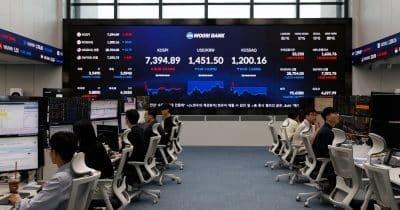
South Korea's financial landscape is undergoing significant changes, particularly with the introduction of leveraged ETFs linked to major semiconductor companies like Samsung Electronics and SK Hynix. The Bank of Korea's recent warning highlights the potential risks these products pose, not only to retail investors but also to the stability of the broader market.
A Rapid Growth Phenomenon
These 2x daily leveraged ETFs are designed to provide double the return of the underlying stock on a daily basis. For instance, a 3% rise in Samsung's stock price would lead to a 6% gain for the ETF, while a similar drop results in an equally magnified loss. Initially approved in April 2026, these ETFs amassed nearly $9.1 billion in assets within just six weeks, showcasing the market's strong appetite for such investment vehicles.
The Risks of Concentration and Retail Losses
However, the Bank of Korea (BOK) has raised alarms about potential concentration risks and retail losses associated with these ETFs. A staggering 92% of the ETF holders are retail investors, many of whom are now contending with significant financial losses in the face of market volatility. The financial watchdog, the Financial Supervisory Service (FSS), had attempted to implement protective measures by requiring investors to undergo mandatory educational training before engaging with these products. Yet, Governor Lee Chan-jin has expressed regret regarding the pace of the ETFs' approval, suggesting that the negative impacts were visible far sooner than anticipated.
Market Dynamics and Forced Selling
One of the underlying concerns regarding these ETFs lies in their daily rebalancing requirements, which necessitate forced buying and selling based on market conditions. In downturns, leveraged funds must sell into declining prices, exacerbating downward pressure on the stock. Conversely, in upswings, these funds end up buying into rising prices, potentially creating an unstable loop. With South Korean retail margin debt already at record levels approximately $39 billion by the end of May 2026 the interconnection between these leveraged products and margin debt raises the stakes even further.
Implications for Investors
Given that the BOK's warning aligns with a record-high margin debt figure, it’s evident that financial regulators are keenly aware of the cascading risks involved. The strategy behind these ETFs was to retain retail capital within South Korea’s markets, competing with foreign investment funds. However, as volatility intensifies and retail losses mount, the implications for both market stability and investor confidence become increasingly concerning. Investors must navigate these waters carefully, being aware of the amplified risks associated with leveraged products in a volatile market environment.