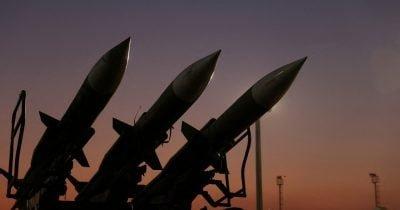
The recent missile attack by Iran’s Islamic Revolutionary Guard Corps (IRGC) on the Al-Azraq Air Base in Jordan has sent ripples through the geopolitical landscape, raising questions about its implications for the cryptocurrency market. On July 9, 2026, the IRGC fired ten ballistic missiles at this strategically significant facility, which houses US military forces. Jordan’s air defense systems intercepted eight of these missiles, averting potential casualties and damage. At the time of the attack, Bitcoin held steady near $63,000, showcasing an unexpected resilience in a climate that might have previously prompted significant sell-offs.
This incident is particularly noteworthy as it occurred shortly after a ceasefire agreement aimed at reducing tensions between the US and Iran. With a history of targeting US military assets, the IRGC's actions serve as a reminder of the volatility that can emerge from such geopolitical conflicts. The precedent set by the IRGC’s previous missile strike on the Al-Asad Air Base in January 2020, which was triggered by the US assassination of General Qasem Soleimani, underscores the potential for escalation and its attendant risks.
From a crypto market perspective, Bitcoin's ability to remain stable amid geopolitical turmoil suggests a shift in how digital assets are perceived in times of crisis. Traditionally, investors have treated Bitcoin as a risk-on asset rather than a safe haven. However, as traditional markets exhibited risk-off sentiment, Bitcoin’s modest response could indicate a budding maturity in its role as an asset class. Additionally, the broader crypto market did react with some volatility, signaling that investors remain cautious.
Moreover, Iran's utilization of cryptocurrency for sanctions evasion complicates the narrative further. The Iranian government has been known to facilitate billions of dollars in transactions through various crypto exchanges, primarily using stablecoins like USDT. This poses a unique challenge for regulators, especially given that Tether has historically complied with requests to freeze accounts linked to sanctioned entities. The sheer volume of USDT flowing through decentralized channels makes enforcement a complex and ongoing battle, akin to a game of whack-a-mole.
For traders in the crypto arena, the correlation between Bitcoin and traditional safe-haven assets, such as gold and US Treasuries, is worth monitoring. Historically, Bitcoin has behaved more like a tech stock than a digital equivalent of gold during periods of market distress. Events highlighting Iran's crypto activities for sanctions evasion could accelerate legislative scrutiny on stablecoin issuers and the broader crypto framework. If this missile strike garners significant attention in US political discourse, the implications for the regulatory environment could be profound.
This article is for informational purposes only and does not constitute financial advice.