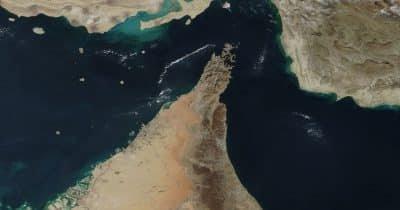
The recent announcement from Iran regarding its claims over parts of the Strait of Hormuz holds significant implications for global energy dynamics and the cryptocurrency sector. By asserting authority over a vital maritime chokepoint, where approximately 20% of the world’s oil supply traverses daily, Iran has managed to strengthen its geopolitical position while potentially complicating the enforcement landscape of cryptocurrency sanctions.
Understanding the Impact of Iran's Actions
Iran's notification to the United Nations' International Maritime Organization introduced a new regime governing passage through the Strait, allowing ships to transit only under Iranian terms. This shift may open avenues for alternative payment mechanisms, such as the introduction of cryptocurrency toll payments.
- Iran established the Persian Gulf Strait Authority by May 2026 for toll management.
- Initial tolls were set at around $1 per barrel.
- The US Treasury sanctioned Nobitex, Iran's largest digital asset exchange, on June 2, 2026.
These developments are critical for crypto investors as they signify Iran's potential use of blockchain technology to maneuver around traditional banking restrictions. The possible adoption of cryptocurrencies for toll payments hints at the growth of informal financial channels in sanctioned environments, a practice that raises alarms for regulatory bodies.
The Broader Consequences in the Market
The recent sanctions against Nobitex underline a tactical evolution in how the US Treasury is handling cryptocurrency infrastructure, particularly in relation to geopolitical instability. The sanctions explicitly targeting crypto exchanges based on non-financial crimes represent a paradigm shift in regulatory scrutiny.
These actions may have a chilling effect on crypto exchanges globally, prompting enhanced compliance scrutiny particularly in relation to geopolitical factors that extend beyond standard financial crime metrics. For many exchanges, compliance might now require an understanding of international relations and geopolitical risks rather than solely adhering to know-your-customer (KYC) norms.
What Lies Ahead for Crypto and Geopolitical Relations
As the situation unfolds, several questions arise for both investors and regulatory bodies: Will other nations follow Iran's approach to bypass sanctions using cryptocurrencies? How will the international shipping community adapt to heightened risks and potential tariffs in a region where the maritime landscape is rapidly evolving? Additionally, how will the Treasury respond to further developments, especially if other countries begin to adopt similar strategies?
Crypto investors should remain vigilant of these geopolitical tensions and their potential impact not only on energy markets but on digital asset compliance and acceptance in sanctioned jurisdictions.
This article is for informational purposes only and is not financial advice.