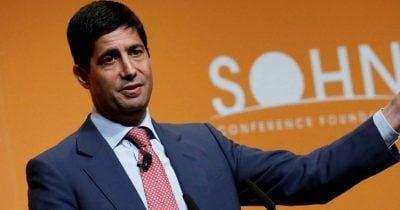
The Federal Reserve's recent decision to maintain interest rates has stirred the cryptocurrency waters, particularly propelling Bitcoin past the $60,000 mark. This rally can be attributed to remarks made by the new Fed Chair, Kevin Warsh, during the first Federal Open Market Committee (FOMC) meeting he led. Despite holding the federal funds rate steady at 3.5% 3.75%, Warsh's assertive tone regarding inflation suggested that the central bank intends to adopt a more hawkish approach to economic stability.
In a unanimous vote, the FOMC opted to keep the target interest rate unchanged, but updated projections hinted at a potentially tighter monetary stance in the future. For instance, the expected federal funds rate for the end of 2026 was revised upwards to 3.8% from 3.4%, reflecting the Fed's concern over persistent inflation. The personal consumption expenditures (PCE) inflation forecast was also increased to 3.6%, significantly above the Fed's traditional target of 2%.
The Consumer Price Index (CPI) was reported at 4.2% year-over-year, the highest rate observed in three years, with some inflationary pressures attributed to energy supply disruptions. Warsh’s statement emphasized that the Fed will prioritize price stability, signaling to markets that inflation control remains paramount. Surprisingly, this hawkish language coincided with a spike in Bitcoin's value, challenging conventional wisdom that expects risk assets to suffer under such circumstances.
Understanding Bitcoin's Resilience
Typically, signals of a tightening monetary policy lead to a decline in riskier assets. This time, however, Bitcoin's ascent can be understood through Warsh's broader acknowledgment of easing inflation risks. While the CPI remains elevated, signs indicating a potential cooling off of inflation pressures can provide relief to investors. Strong fundamentals and a robust outlook for digital assets have drawn interest, encouraging Bitcoin’s rally alongside this evolving economic narrative.
The Implications for Market Players
For crypto investors, the Fed's updated outlook translates into a landscape where liquidity conditions may be tightening, yet still manageable for now. With the Fed's unified stance hinting at a cohesive internal strategy under Warsh's leadership, the conflict between actual inflation rates and the Fed’s forecasts becomes crucial to monitor. Current CPI figures exceed the PCE expectations, adding volatility to the financial environment.
Such a shift from a stance of “patience” to “preemption,” as articulated by Fitch Ratings, suggests that the Fed is more prepared to act decisively based on emerging economic data. This approach may tighten financial conditions, even without explicit interest rate hikes, fundamentally altering the regulatory landscape surrounding cryptocurrencies.
This analysis is for informational purposes only and should not be construed as financial advice.