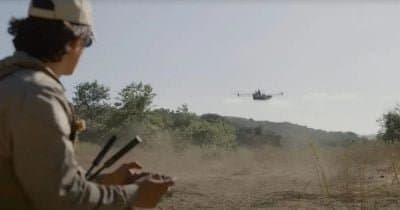
CIA Director John Ratcliffe revealed at the Pennsylvania Defense and Innovation Summit on July 15 that Ukrainian AI-guided drones have shortened the average battlefield survival time of new Russian recruits to just 20 to 30 minutes. This stark figure highlights a dramatic shift in combat conditions facilitated by low-cost, AI-powered unmanned aerial vehicles (UAVs), which Ukraine employs to counterbalance Russia's numerical superiority.
Ukraine's strategy hinges on AI-enabled systems like the Hornet loitering munitions, trained on extensive Russian target footage to enhance precision strike capabilities. Such technology has become a force multiplier, effectively amplifying limited resources into significant tactical advantage. According to US officials, Russian military losses hover around 7,000 soldiers weekly, a staggering attrition rate influenced by these advanced defense measures.
Cryptocurrency's Role in Sustaining Drone Warfare
On the flip side, a Chainalysis report from March 2026 exposed that pro-Russia paramilitary groups have raised over $8.3 million in cryptocurrency donations since the conflict's outset in 2022. A significant share of these funds is funneled into UAV procurement and essential drone components, revealing crypto's critical function as a financial lifeline in modern conflicts where traditional funding avenues are constrained by sanctions.
The US Treasury's Office of Foreign Assets Control (OFAC) responded by sanctioning Russian drone developers OKO Design Bureau and KB Vostok for publicly soliciting crypto donations. These targeted measures aim to sever digital asset pipelines that fuel Russia's drone capabilities. Such enforcement actions strengthen regulators' positions to push for broader restrictions on digital asset transactions, forcing exchanges and platforms to tighten compliance or face legal repercussions.
This interplay between AI technology and cryptocurrency financing signals an evolving warfare landscape where digital innovation and financial decentralization converge. Military outcomes and geopolitical power balances increasingly hinge on capabilities often invisible to conventional arms control frameworks.
This material is informational and does not constitute financial advice.