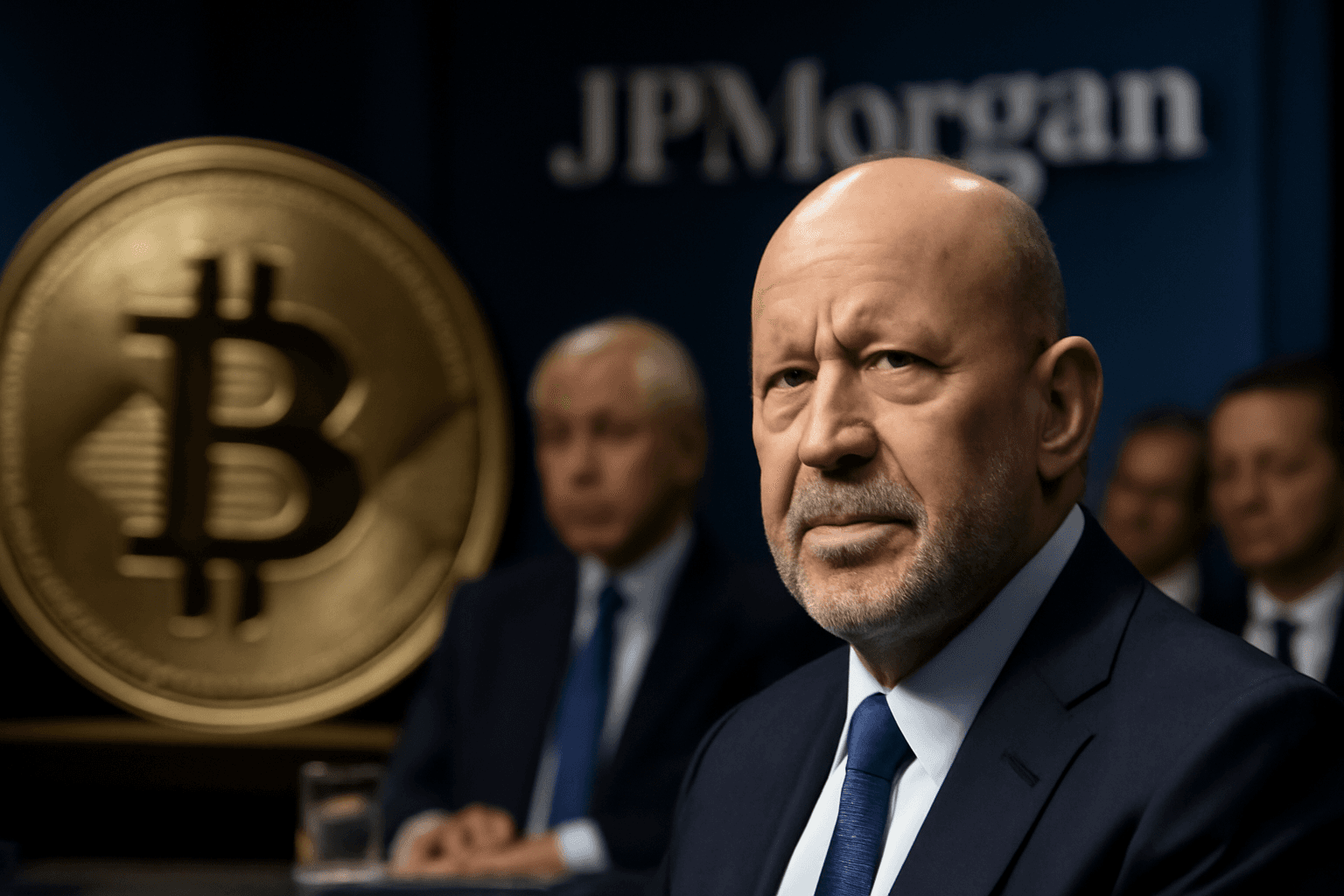
Goldman Sachs CEO David Solomon threw his weight behind the CLARITY Act, telling lawmakers the bill would establish clear rules for digital asset markets and create a level playing field for all participants. His public endorsement landed just as Congress was finalizing updated bill text ahead of a potential Senate floor vote, making the timing deliberate rather than coincidental.
Solomon's argument is straightforward: without a defined regulatory framework, responsible market development stalls and firms operating in good faith face the same uncertainty as bad actors. Goldman has been quietly expanding its digital assets desk for years, so Solomon's position is less a philosophical statement than a business calculation.
The pushback, though, is real. JPMorgan CEO Jamie Dimon opposed the bill, and he was not alone. Several large banks have raised concerns about provisions they say could expose traditional financial institutions to competitive disadvantages or create compliance burdens that crypto-native firms would not face equally. Dimon has long been skeptical of crypto as an asset class, even as JPMorgan has built blockchain infrastructure of its own, which makes his opposition to the CLARITY Act read more as a structural objection than a blanket hostility to the sector.
The split between Solomon and Dimon reflects a broader fault line on Wall Street. Firms that have moved further into digital asset custody, trading, or tokenization tend to want rules in place. Those still circling the space from a distance have less urgency and more to protect from a regulatory shift that could redraw competitive boundaries. The debate mirrors what happened in other jurisdictions trying to pin down crypto regulation, where industry incumbents and newcomers rarely want the same outcome from the same legislation.
The CLARITY Act is designed to draw jurisdictional lines between the SEC and the CFTC, a question that has paralyzed enforcement and product development in the US for the better part of five years. Getting that boundary defined would matter enormously for any bank or fund that wants to offer spot crypto products without the legal exposure of guessing wrong about which regulator has authority. Senate timing remains uncertain, and the updated text has not yet been published in final form.
This article is for informational purposes only and does not constitute financial or investment advice.