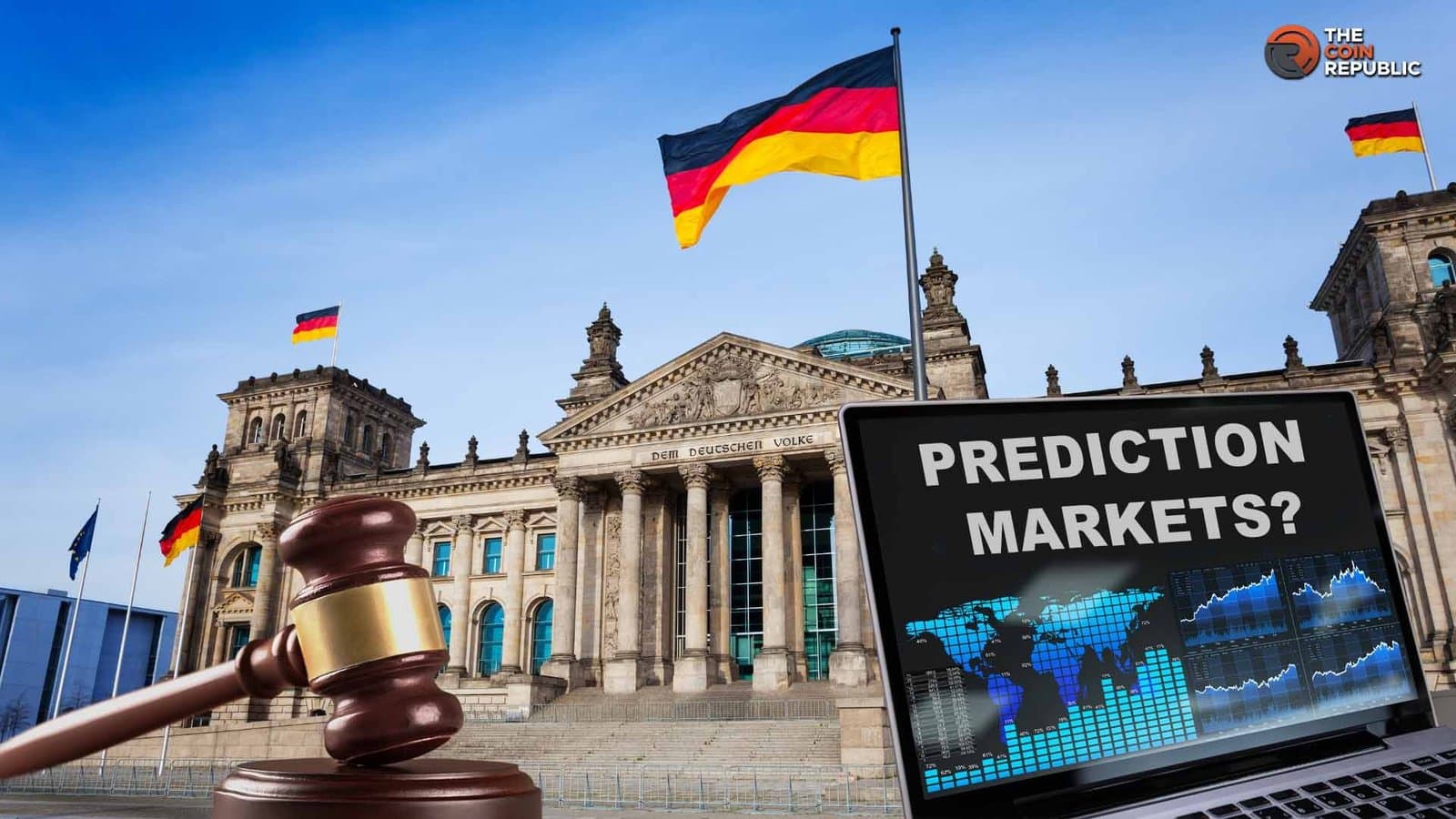
Germany shut the door on prediction markets like Kalshi and Polymarket last September and has kept it locked ever since. The Gemeinsame Glücksspielbehörde der Länder, the joint gambling authority of Germany's 16 federal states, issued a formal warning about betting on public events. For platforms built on crypto rails and settled in stablecoins, that warning amounts to a permanent barrier.
The question that divided US regulators for all of 2026 has a simple answer in Germany: these platforms are not getting licensed. There is no license to apply for, and the regulatory architecture works differently when contracts live on-chain instead of in bank accounts.
How Crypto Changes What Regulators Can Reach
Traditional enforcement moves fast when a company has a registered office. Authorities fine them, seize domains, freeze assets. A deployed smart contract has none of those. The pressure shifts to the edges of the stack instead: front ends, hosting providers, market makers, payment processors, and the advertising channels that drive users.
Payment blocking works in traditional finance because a bank or card network sits between buyer and seller. Stablecoin settlement removes that chokepoint entirely. Germany cannot reach foreign operators through foreign courts, so it works on distribution instead. The regulator withholds licenses, blocks advertising, pressures payment processors, and maintains a public safelist of authorized platforms.
This model hit its limits in court. Last March, Germany's Federal Administrative Court ruled against the GGL, finding the regulator lacked sufficient legal basis to force internet access resellers to block gambling sites. The authority shifted tactics and now works primarily through hosting providers while asking lawmakers for broader enforcement powers.
The strategy still moves volume. Research commissioned by the GGL found that roughly 77% of online gambling revenue reaches licensed sites in Germany. The remaining quarter is substantial and growing. Unlicensed platforms pulled in an estimated €547 million in gross revenue during 2024, up from €466 million the year before, and captured around 22.4% of all stakes.
Spain took a harder line in May, blocking both Kalshi and Polymarket for lacking local licenses. Germany's approach is softer but no less final. The absence of a regulatory pathway means European expansion for these platforms will require working around national restrictions one country at a time, with no clear licensing route in sight.
This article is informational and does not constitute financial or legal advice regarding prediction markets or cryptocurrency platforms.