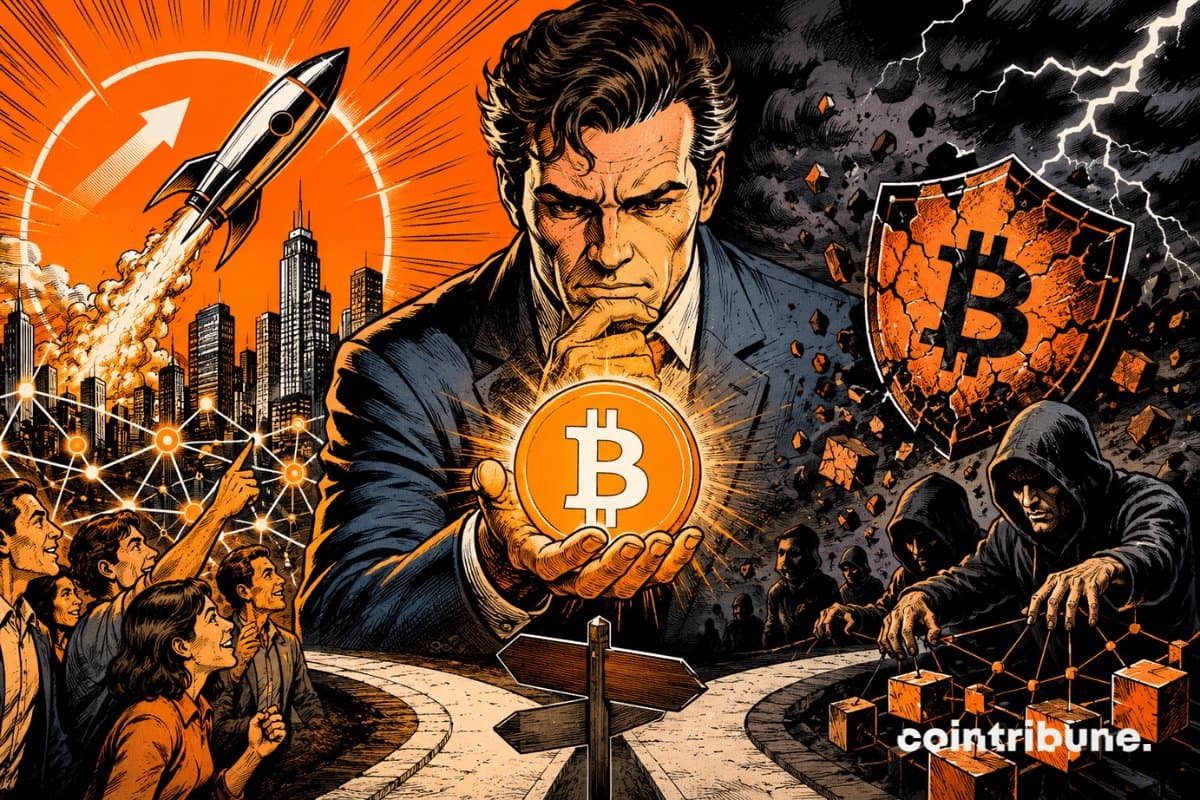
Recent discussions surrounding BIP-110 have polarized the Bitcoin community, with implications that could reshape the network's operational framework. This proposal seeks to impose temporary limits on the inscription of non-financial data, aiming to mitigate what some proponents label as spam transactions related to protocols like Ordinals and BRC-20.
Understanding the Proposal's Mechanism
BIP-110, crafted by developer Dathon Ohm and backed by notable figures like Luke Dashjr, sets forth a series of seven new consensus rules. These rules would restrict the data inscription size, compressing new outputs to 34 bytes and capping OP_RETURN outputs to 83 bytes. Notably, this initiative proposes a User-Activated Soft Fork, shifting the activation authority from miners to node operators. Such a mechanism marks a departure from traditional activation methods in the Bitcoin network, stirring debates around its neutrality and decentralization.
The Risk of Fragmentation
The crux of the controversy lies in the perception of censorship that BIP-110 might introduce. With current miner support hovering below 1%, the proposal risks becoming a sidelined effort without consensus within the broader community. Advocates argue that these restrictions are crucial for maintaining Bitcoin's efficiency, while critics assert that they undermine the foundational principle of freedom in blockchain transactions. If BIP-110 fails to achieve a broad acceptance, it may result in a fragmented ecosystem, further complicating the operational landscape of Bitcoin.
In the midst of this ongoing debate, questions arise about the future path of Bitcoin, especially in light of previous movements like the market uncertainty and its resilience. As stakeholders weigh the pros and cons of BIP-110, the forthcoming decisions could have lasting repercussions on Bitcoin's identity as a decentralized financial network.
This material is for informational purposes only and does not constitute financial advice.