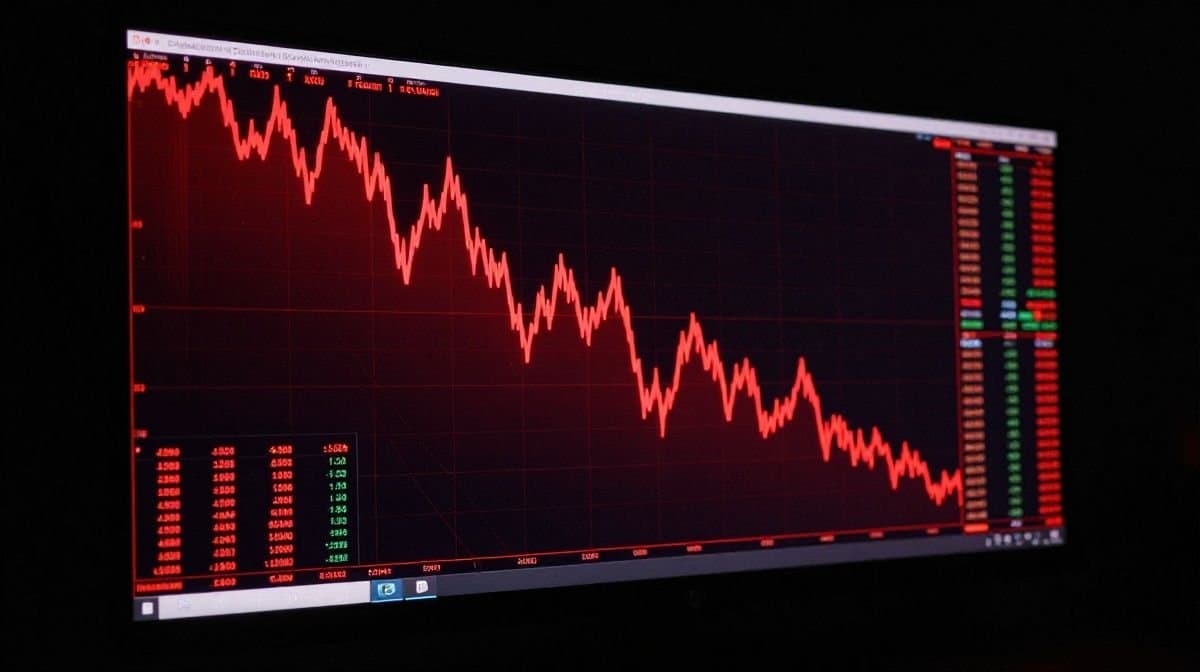
DeXe (DEXE) hit an all-time high of $48.89 on July 13, 2026, then collapsed to around $4 within hours, wiping roughly 85% of its value in a single session. By the time most traders noticed, the token was already down 84.73% to $5.27 on the 24-hour chart, while the broader crypto market sat slightly in the green. Billions in nominal market cap evaporated with no hack, no partnership cancellation, no negative headline to point at.
The setup had been building for just four days. DEXE was listed on an exchange around July 9 and went parabolic almost immediately, with shorts getting squeezed as the price ripped from the teens into the high $40s. That kind of move has a very specific anatomy: it runs on mechanics, not fundamentals. The listing catalyst and the short squeeze were doing the heavy lifting, and when both exhausted themselves, there was nothing structural underneath to slow the fall.
The unwind came in stages. First a 10% slide, then a 30% pullback, then a 58% plunge in a single session, before the final leg crushed the price down to single digits. The chart showed a near-vertical drop from the mid-$30s straight through the $4 handle. No bounce, no consolidation, just a waterfall.
What analysts actually found
No confirmed exploit is on record. What analysts documented instead was concentrated selling into a thin, over-extended market, likely from large holders or panic exits compounding each other. Several traders had already been flagging problems during the pump: the project's white paper and GitHub repository reportedly hadn't been updated in years, and at least one analyst described DEXE publicly as an old project from a previous cycle that had been heavily pumped again, a profile that historically ends in a sharp shakeout rather than a sustained trend.
Traders on X were also opening short positions after noticing the team had left the token's maximum coin supply deliberately unclarified. That kind of ambiguity is usually a yellow flag, and here it fed directly into the sell-side pressure.
The rug pull question is harder to answer cleanly. A technical rug pull means a development team drains liquidity or dumps a pre-mined supply and disappears. What's documented so far looks more like a parabolic blow-off top collapsing under concentrated selling than a confirmed developer exit. The distinction matters legally and structurally, but for traders who bought anywhere above $10, the practical outcome is the same. One community member put it simply: it's behaving like it got rugged, whether or not the label officially sticks.
This article is for informational purposes only and does not constitute financial advice. Crypto assets are highly volatile; always do your own research before making investment decisions.