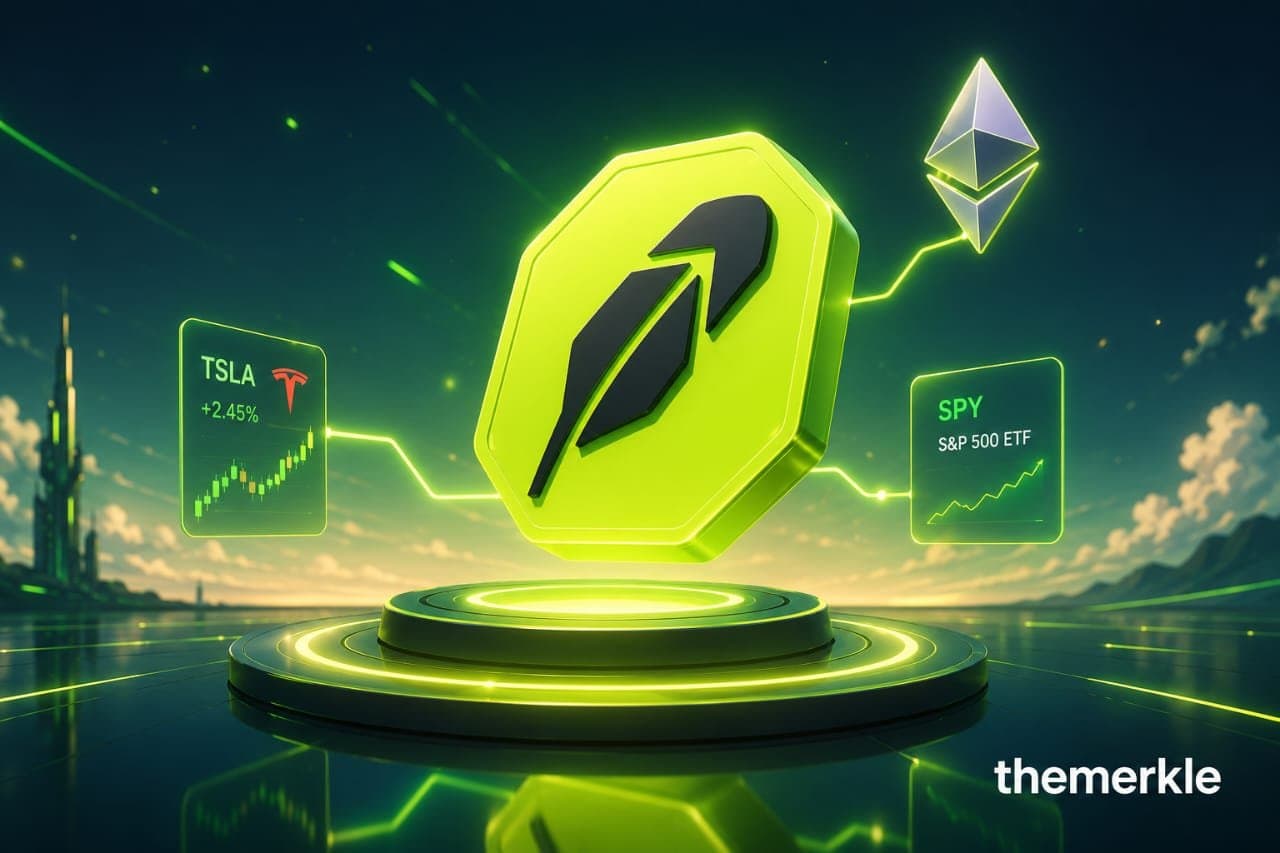
July 1 was the date Robinhood Chain's public mainnet went live. Three weeks later, builders are shipping on it faster than on most new infrastructure that launched this year.
The chain is an Ethereum Layer 2, built on Arbitrum's Orbit stack. That framework lets teams spin up their own customizable L2 or L3 without writing consensus code from scratch.
Its core pitch is a new generation of tokenized stocks and ETFs that trade around the clock and connect directly to onchain applications. That alone separates it from the typical "general-purpose" chain announcement.
Robinhood's first tokenized stock products actually launched on Arbitrum One earlier in 2025. Shared infrastructure, though, means competing for block space with every other app on the network. General-purpose chains are optimized for nothing in particular, which makes them acceptable for most things and genuinely ideal for very few.
Robinhood Chain sidesteps that entirely. It's a dedicated Layer 2 tuned specifically around tokenized real-world assets, fast execution, and predictable fees. For a developer building anything in that space, the difference in feel is immediate.
Settlement still goes to Ethereum. Transactions are processed off the main network, batched, then posted back for final settlement and data availability. That architecture is what gives the chain Ethereum-grade security without forcing developers to build a trust model from scratch.
The fee structure reflects it. Lower costs and faster execution come from processing transactions away from Ethereum's congested main layer, not from cutting corners on security guarantees.
Then there's the asset side. Robinhood Chain offers native access to tokenized stocks and ETFs that can be used directly as DeFi collateral or yield-generating assets. That's not a theoretical roadmap item; it's live.
Protocols already running on the chain include Uniswap and Morpho. Those names matter because they bring existing liquidity and user habits with them, not just code. And behind all of it sits Robinhood's $380 billion asset base, which gives the chain a distribution channel most new networks spend years trying to build.
The combination, dedicated infrastructure, Ethereum settlement, real-world assets as native collateral, and live DeFi protocols from day one, is what most new chains promise on a whitepaper and few deliver on mainnet inside a month.
This article is for informational purposes only and does not constitute financial advice. Always do your own research before making investment decisions.