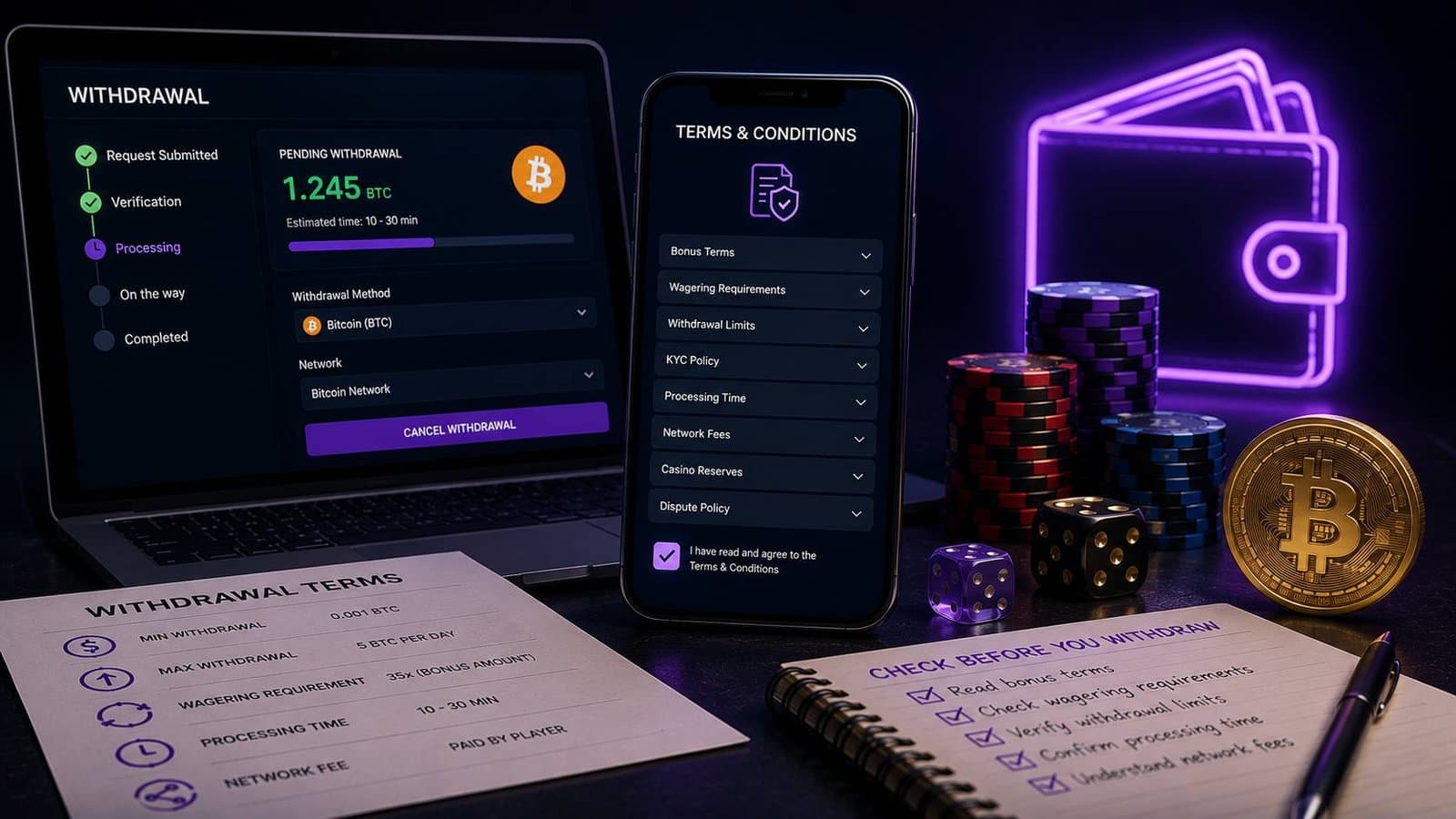
Withdrawal terms in Web3 casinos often hide the reasons behind payout delays. These clauses are carefully worded to be legally sound but seldom read, giving operators the flexibility to delay payments. Many disputes over withheld funds trace back to phrases that sound routine but grant significant rights to the platform.
Common Withdrawal Clauses Explained
According to industry insiders, the withdrawal rules aren’t designed for clarity but to protect the operator by using broad, defensible language. Players who skim these terms unknowingly agree to conditions that can restrict or delay their withdrawals.
One frequent clause reads, "Withdrawals may be subject to verification." This means identity checks (KYC) often happen only when a withdrawal hits a certain size or risk threshold, rather than at signup. Platforms promoting easy registration actually defer scrutiny to the payout stage.
Statements that "processing times are estimates" give operators cover if internal reviews take longer than promised. Even if the casino advertises fast payouts, these estimates can mask delays caused by manual checks.
Bonus rules also play a large role. Most casinos require wagering requirements to clear before bonus funds become withdrawable. Attempting to cash out too soon can lead to losing the bonus entirely.
Anti-money laundering obligations appear as clauses allowing requests for source-of-funds information on large withdrawals or flagged accounts. Operators must satisfy regulators before releasing funds.
Payment methods matter too: withdrawals often must use the same method as deposits, which on crypto platforms can restrict moving funds across blockchains. Lastly, limits on daily or weekly withdrawal amounts prevent large sum payouts at once, slowing access to winnings.
Understanding these common clauses helps players anticipate hurdles before depositing and avoid frustration later. Many terms align with broader regulatory demands rather than operator preferences.