Brent crude oil saw a sharp drop of over 7%, falling to roughly $87 per barrel after the U.S. and Iran paused their strikes near the Strait of Hormuz. This easing of conflict lowered inflation worries that had been pressuring riskier assets, including cryptocurrencies.
The change in the Middle East sparked relief across markets. Major U.S. stock futures rallied: the Nasdaq 100 climbed 1.36% and the S&P 500 gained 0.80%. Precious metals like gold and silver also moved higher as fears over inflation began to subside. Meanwhile, the crypto sector responded with mild gains; the CoinDesk 20 Index edged up 0.1% since midnight UTC and 1.6% over the past day.
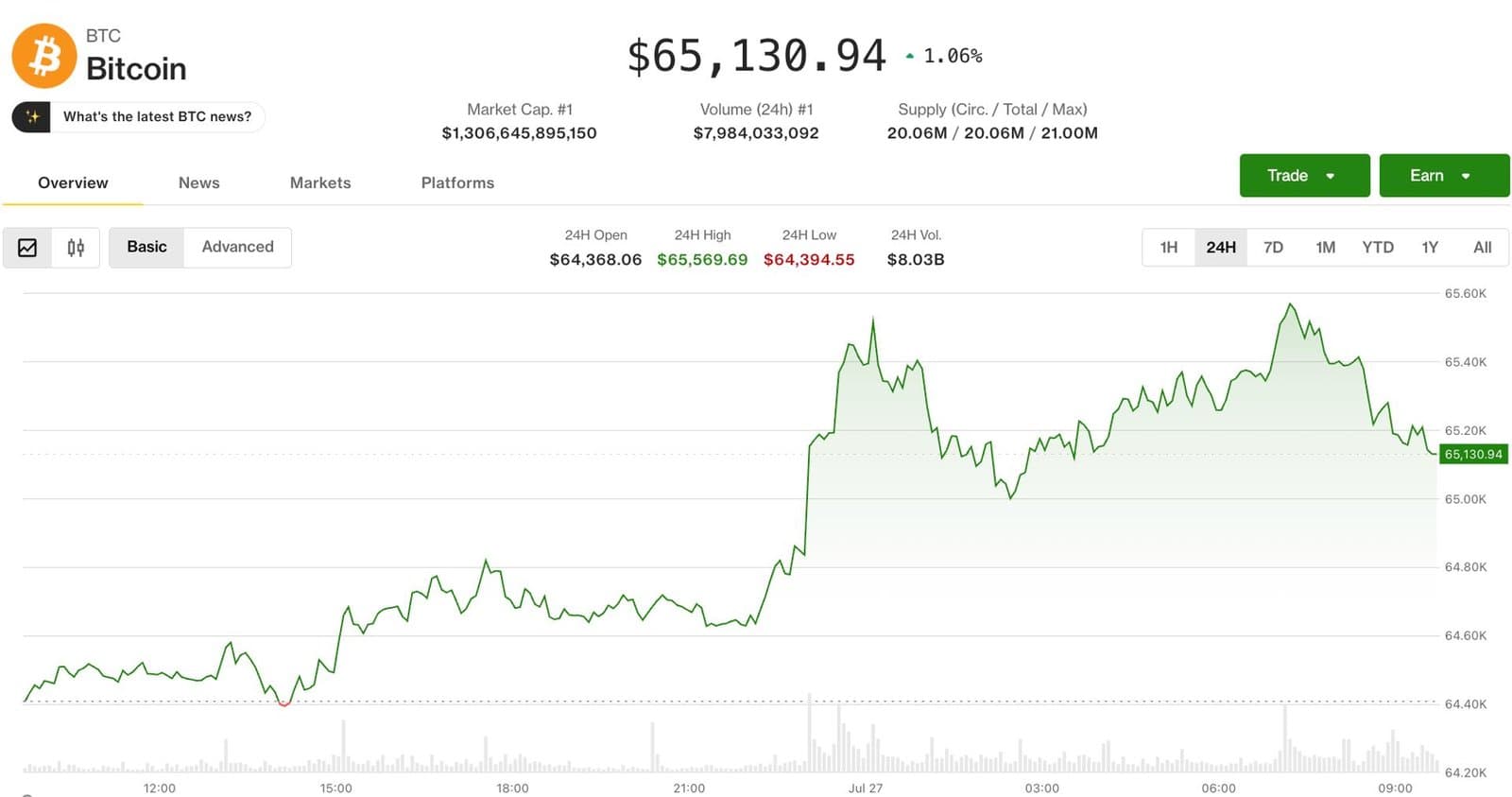
Bitcoin hovered near $65,000, trading around $65,143 at the time of reporting, after briefly spiking to $65,600 early Sunday during futures trading. Despite the modest price change, sentiment improved beneath the surface, evidenced by a reduction in bearish bets. Ether outpaced Bitcoin, gaining 0.51% and pushing closer to the psychologically important $2,000 mark for the first time since early June.
The Federal Reserve is set to decide this week whether to raise interest rates for the first time in three years, amid inflation holding at about 4.1%. The inflation pressure had been fueled partly by soaring oil prices linked to the conflict, but the pause in hostilities has reduced the chances of a rate hike from 37.4% last Friday to 30.5%, according to CME Group's FedWatch tool.
On the derivatives front, many bearish traders on Bitcoin took losses as the spot price bounced above $64,000, leading to forced closures of short positions that accounted for most of the $312 million liquidated in the past 24 hours. Yet, futures traders are cautious, with open interest declining from Friday's levels, suggesting a wait-and-see approach ahead of the Fed decision.


