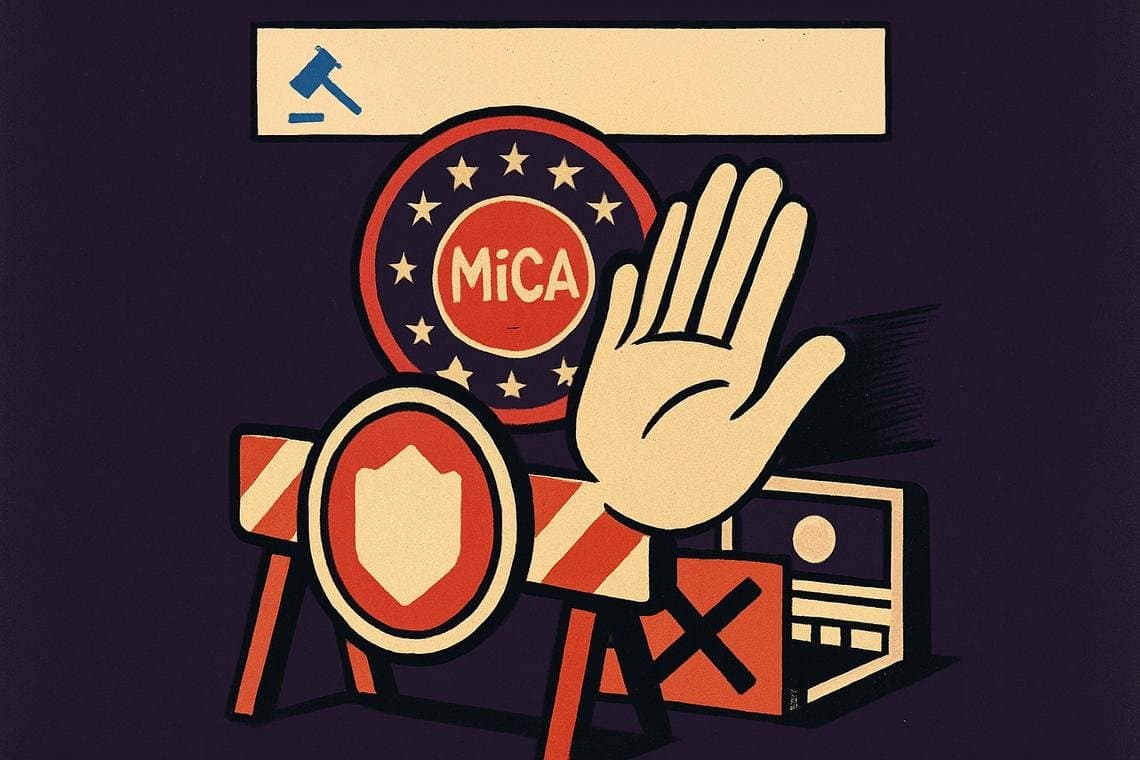
The European Securities and Markets Authority has officially ended the MiCA transitional period. Crypto businesses operating across the European Economic Area can no longer rely on old national frameworks. They must now secure full MiCA authorisation or halt their services in the EU.
This shift marks a key regulatory tightening designed to unify crypto oversight across EU member states. The transitional period was initially introduced to give firms time to adapt to the new EU-wide regime, but that grace period has now closed. Without a MiCA licence, platforms offering services like custody, transfers, or staking cannot legally operate in covered activities within the region.
Compliance and Market Impact
Some companies, like Nexo, have already restructured by partnering with MiCA-authorised providers such as Tangany and DLT Finance. Tangany’s licence covers custody and staking, granting it passporting rights throughout the EU, which illustrates how firms are navigating the new landscape. Meanwhile, ESMA is also implementing simplified transaction reporting to ease compliance burdens, reflecting its effort to balance regulation with operational efficiency.
A notable development is the ongoing preparation for T+1 settlement in the EU, which aims to accelerate transaction finality across multiple asset classes. also EuroCTP’s approval as a central trade processor promises enhanced transparency and streamlined infrastructure for shares and ETFs. To further bolster resilience, major ICT incidents will now be covered under the DORA framework, adding a cybersecurity layer to MiCA’s regulatory foundation.
the end of the transitional phase forces crypto firms to either comply fully with MiCA or exit the European market. Roughly 100 firms have already secured licencing so far, reflecting the urgency and scale of this regulatory evolution.
The content here is for informational purposes and does not constitute financial advice.