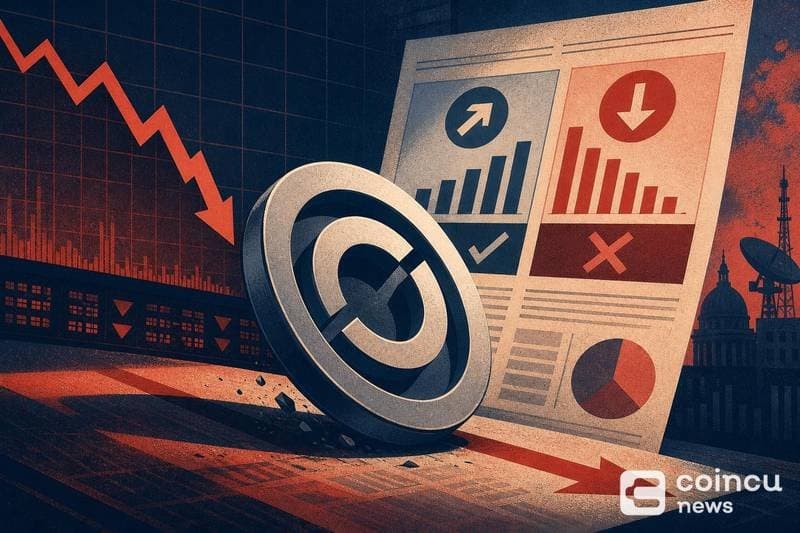
Circle's shares dropped sharply even though the stablecoin issuer beat profit expectations. The problem was revenue, which fell short of forecasts and triggered the selloff that dominated market sentiment around the earnings report.
Here's what spooked investors: a revenue miss often carries more weight than an earnings surprise. When top-line sales disappoint, traders read it as a slowdown in real demand and growth momentum, regardless of how well a company controlled costs on the profit side. For a business still scaling, the revenue trajectory is the number that matters most because it signals whether the core product is actually gaining traction in the market.
Circle issues USDC, one of the largest dollar-backed stablecoins in circulation. That makes revenue growth a critical barometer for how fast the company is monetizing its franchise. A miss there sends a specific message: USDC adoption may be plateauing or growth is hitting friction.
Earnings beats can sometimes reflect accounting wins or one-time items that don't translate to durable business expansion. Revenue, by contrast, shows you whether customers are actually spending more. For a fintech company building out a crypto product in a still-emerging market, that distinction matters enormously to how Wall Street prices the stock.
This is informational reporting on market movements and earnings data, not investment advice or a recommendation to buy or sell any security.