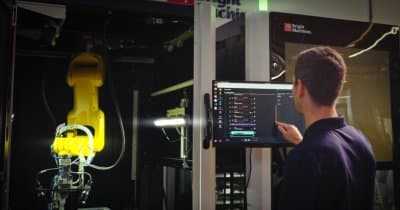
Bright Machines has introduced its Hybrid Bright Robotic Cell (BRC) to transform how AI servers are assembled. This new system integrates human operators into a sensor-rich robotic cell, ensuring every manual step is digitally tracked. This innovation directly addresses a critical bottleneck in AI infrastructure manufacturing: maintaining product traceability when humans intervene.
Keeping human skill and data intact
Despite advances in automation, certain assembly tasks like handling complex cables or fitting delicate components still need human hands. Normally, these manual steps break the continuous data stream robotic lines provide, making quality tracking difficult. The Hybrid BRC solves this by allowing operators to work inside a monitored environment where sensors capture every action. This preserves traceability from the first screw to the final shipping label, enabling higher manufacturing consistency.
Impact on AI hardware scalability
Previous Bright Machines cells demonstrated an ability to assemble up to 50 servers per hour with a 98% first-pass yield, a benchmark that keeps defect rates low and costs manageable at scale. As AI servers face surging demand, this level of precision becomes key in preventing costly production errors. With over $400 million raised, including a $126 million Series C in mid-2024, Bright Machines is expanding its Bright Factory platform and developing tools like Bright Designer to automate server design. Their partnerships with NVIDIA and Microsoft Azure extend this ecosystem further, linking manufacturing data to cloud analytics and management.
This content is informational and does not constitute financial advice.