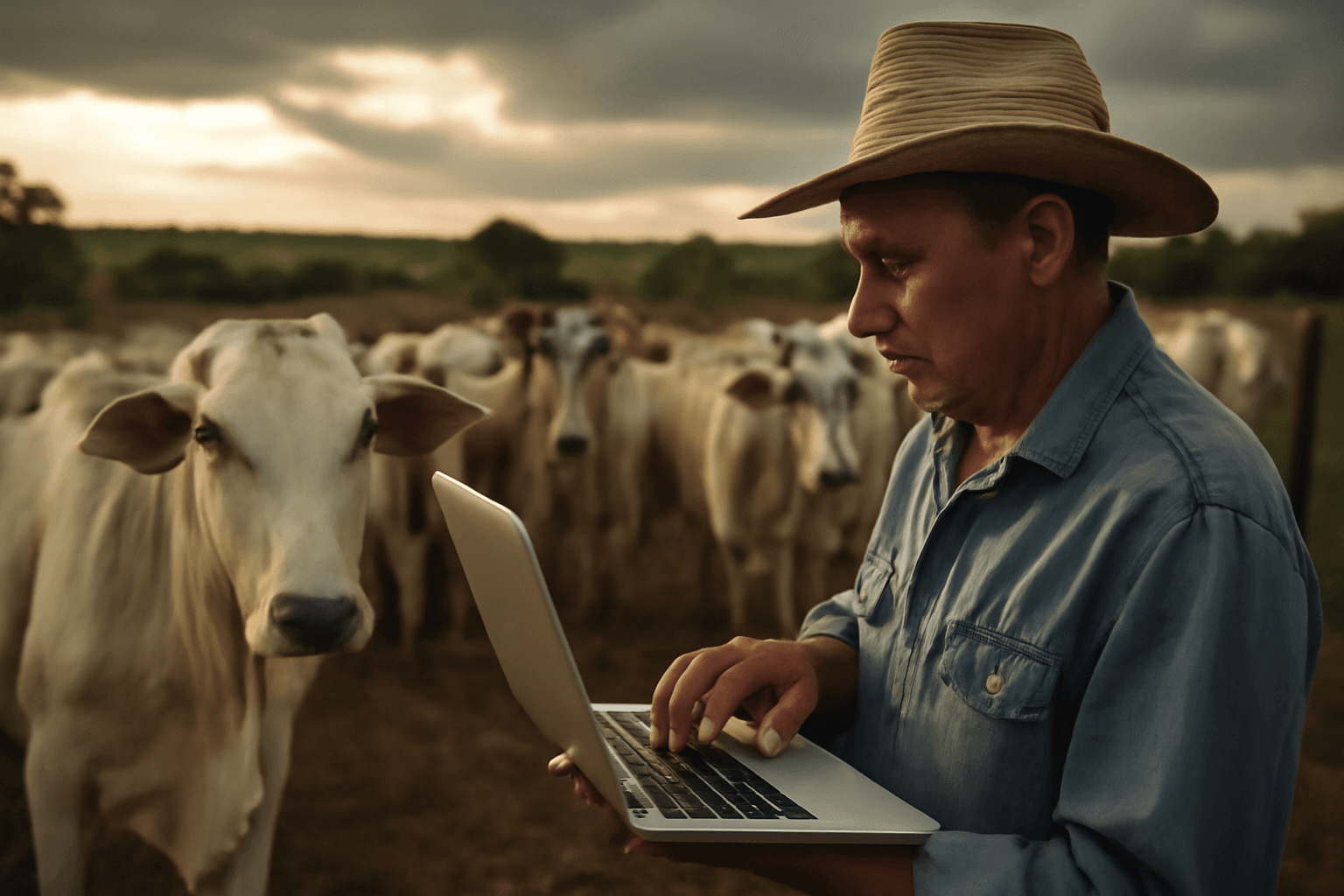
A farm in Paraná, Brazil, recently secured a $20,000 loan by leveraging blockchain technology to tokenize ten cows as collateral. This innovative approach uses smart collars to track the health and location of each animal in real time, transforming livestock into digitally monitored assets that banks can evaluate continuously.
How Tokenization Changes Agricultural Lending
At the heart of this development is Cowmed’s technology, which equips each cow with a unique digital identity and wellness data, recorded live on the blockchain. This system reduces the uncertainty lenders have traditionally faced when valuing livestock, significantly lowering credit risks. The tokenization process also means that if a cow dies, it can be substituted with another to maintain at least 120% collateralization for the loan.
Farmers at Engendro Velho received a Financial Rural Product Note (CPR-F) from BMP, a direct credit society, with the ten tokenized cows assigned to Target FIDC, a fintech firm that registered the deal on B3, Brazil’s main stock exchange. This is the first transaction of its kind recorded with B3 and sets a precedent for tokenized stock trading in the agricultural sector.
Humberto Brenner from Target FIDC highlighted that continuous monitoring could increase the assessed value of a cow by up to 2.5 times compared to traditional unmonitored contracts. That improvement opens doors for farmers to access better loan terms and higher credit limits.
Currently, Cowmed’s system supports over 1,400 farms and tracks more than 900,000 cows, offering heat alerts, health updates, and feeding trend analyses. The live insight this generates is key for lenders wary of livestock depreciation and mortality risks.
This breakthrough provides a fresh alternative for farmers struggling to secure financing, directly connecting agricultural producers with financial institutions through digitally backed live assets.