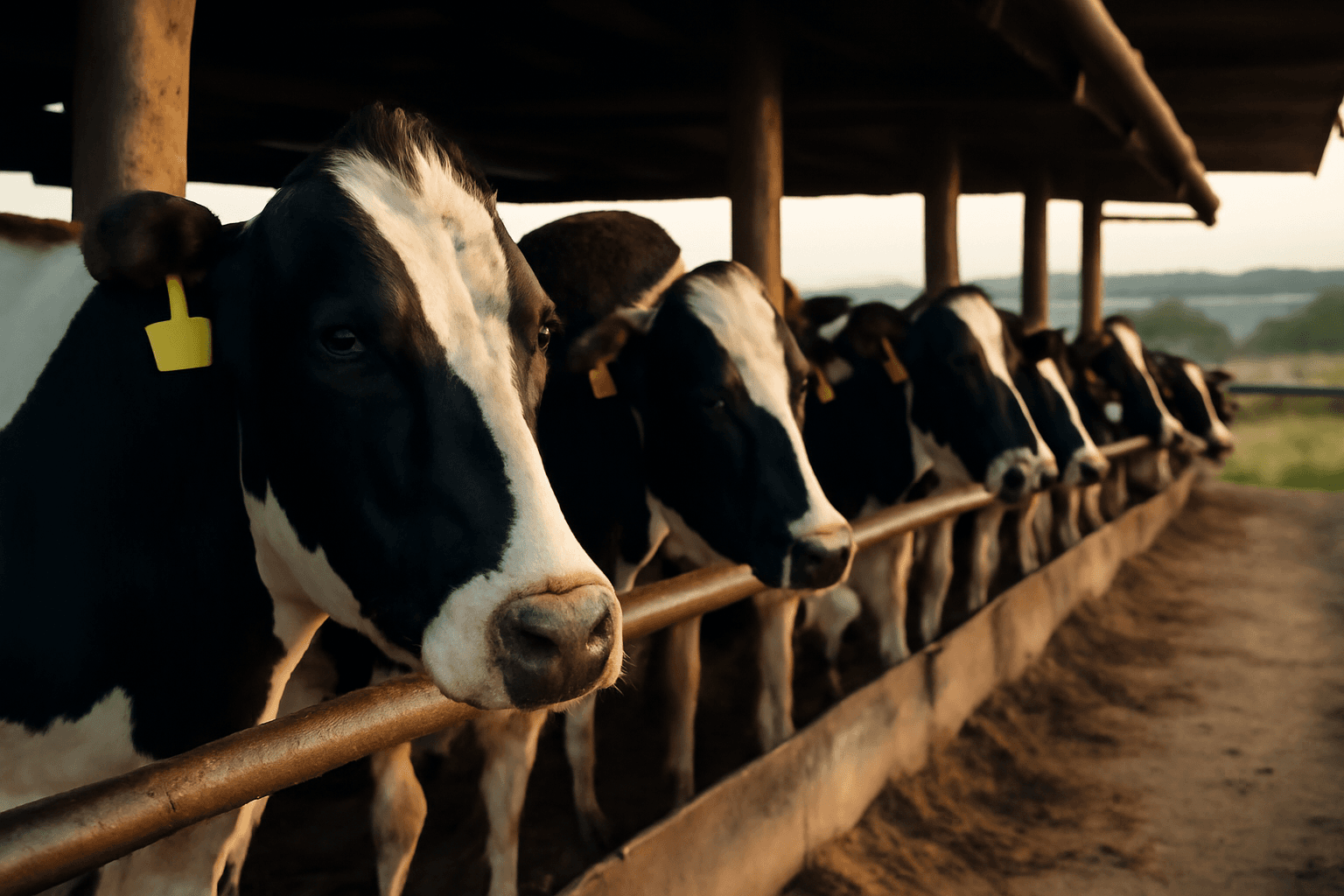
A rural loan of R$100,000 ($19,600) in Brazil has been secured using 10 dairy cows identified through digital tokens, marking a pioneering credit transaction involving tokenized livestock collateral in the country.
The cows, valued at R$120,000 ($23,500), belong to Fazenda Engenho Velho in Paraná and served as backing for a rural credit note registered on B3, Brazil's main stock exchange. The financing was provided by BMP Sociedade de Crédito Direto via a financial Rural Product Note (CPR-F), later transferred to Target FIDC, which structured and oversaw the registration of the credit instrument.
Each animal is tagged with a unique encrypted ID linked to data gathered by Cowmed’s smart collars. These collars collect real-time information on the cows’ health status, behavior, and location. This technological feature allows lenders to monitor the collateral remotely instead of relying on periodic physical inspections, cutting down information gaps that have traditionally led to substantial discounts on livestock collateral value.
Enhancing Trust Through Continuous Monitoring
Target FIDC’s director, Humberto Brenner, explained that lenders typically applied deep discounts to cattle values due to uncertainty over their condition and whereabouts, sometimes valuing a R$20,000 cow at only R$8,000 for collateral purposes. The continuous monitoring enabled by smart collars helps lenders approach market prices more closely, though final credit decisions and valuation discounts remain at their discretion.
This tokenization effort does not turn cows into freely tradable crypto assets. Instead, it creates a secure digital identity directly tied to the credit contract and its registration at B3. No public blockchain or secondary market for the animal data was indicated. The system primarily improves identification, tracking, and collateral control while preventing one animal from being pledged for multiple loans.
The use of Cowmed’s collars exemplifies how technology reduces lenders’ dependency on manual inspections and physical audits. The devices generate alerts for health issues, reproductive status, nutrition, and heat stress, providing near real-time transparency on livestock conditions.