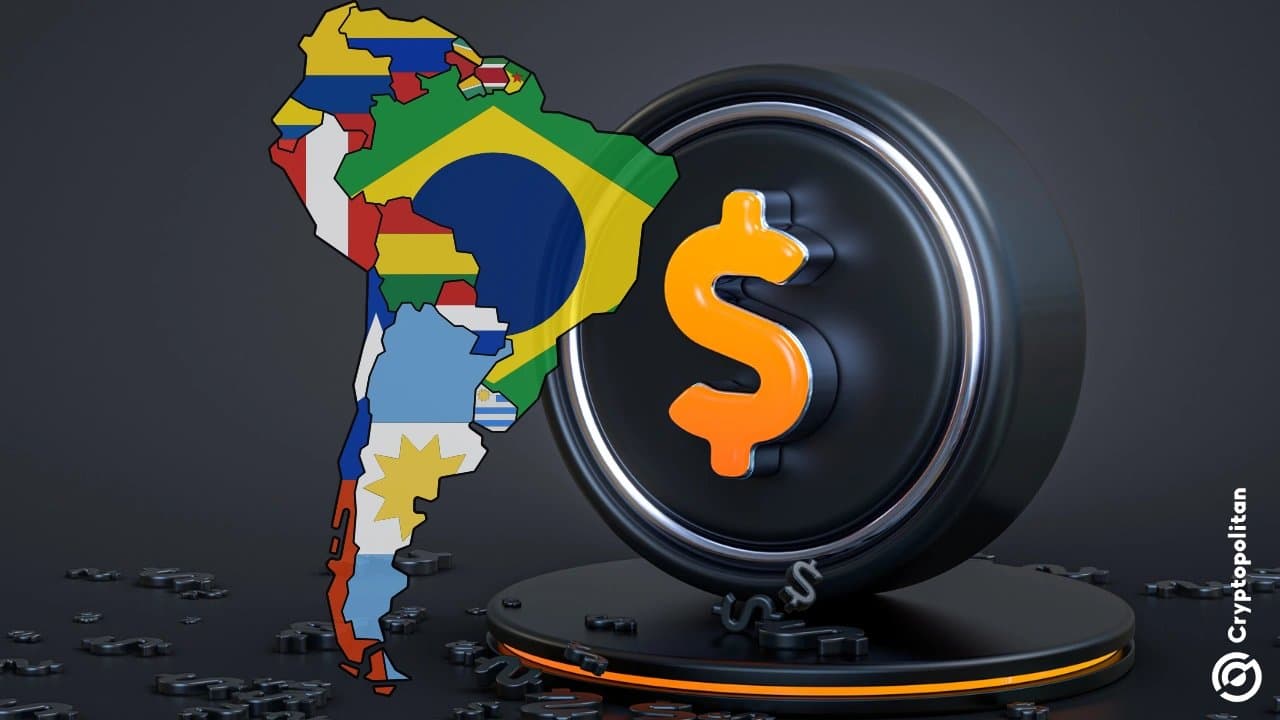
Brazil and Argentina are accelerating their use of stablecoins to move money across borders, outpacing traditional financial channels despite warnings from the International Monetary Fund. The IMF recently highlighted that crypto transfers, mainly stablecoins, now handle the majority of Brazil’s cross-border transactions, signaling a significant shift in how funds flow in and out of Latin America’s largest economy.
Stablecoins Surpass Traditional Transfers in Brazil
The IMF’s Financial System Stability Assessment revealed that since 2017, stablecoins have gradually replaced conventional methods for cross-border payments in Brazil. Lower fees and tax benefits are driving both companies and retail users to prefer digital assets. This trend challenges traditional financial infrastructure and raises questions about regulatory oversight, as stablecoins operate in a largely unregulated environment.
Argentina Defies Central Bank Ban with Peso Stablecoins
Meanwhile, Argentine banking groups BIND and Petersen are launching peso-backed stablecoins despite the country’s central bank maintaining a ban on such digital currencies since 2022. This move underlines a growing disconnect between regulatory authorities and market participants eager to use crypto’s advantages for faster, cheaper payments.
The IMF also noted correlations between stablecoin demand and global economic indicators like the S&P 500 and Bitcoin’s price, suggesting that macroeconomic factors may influence crypto adoption in these countries.
This material is for informational purposes only and does not constitute financial advice.