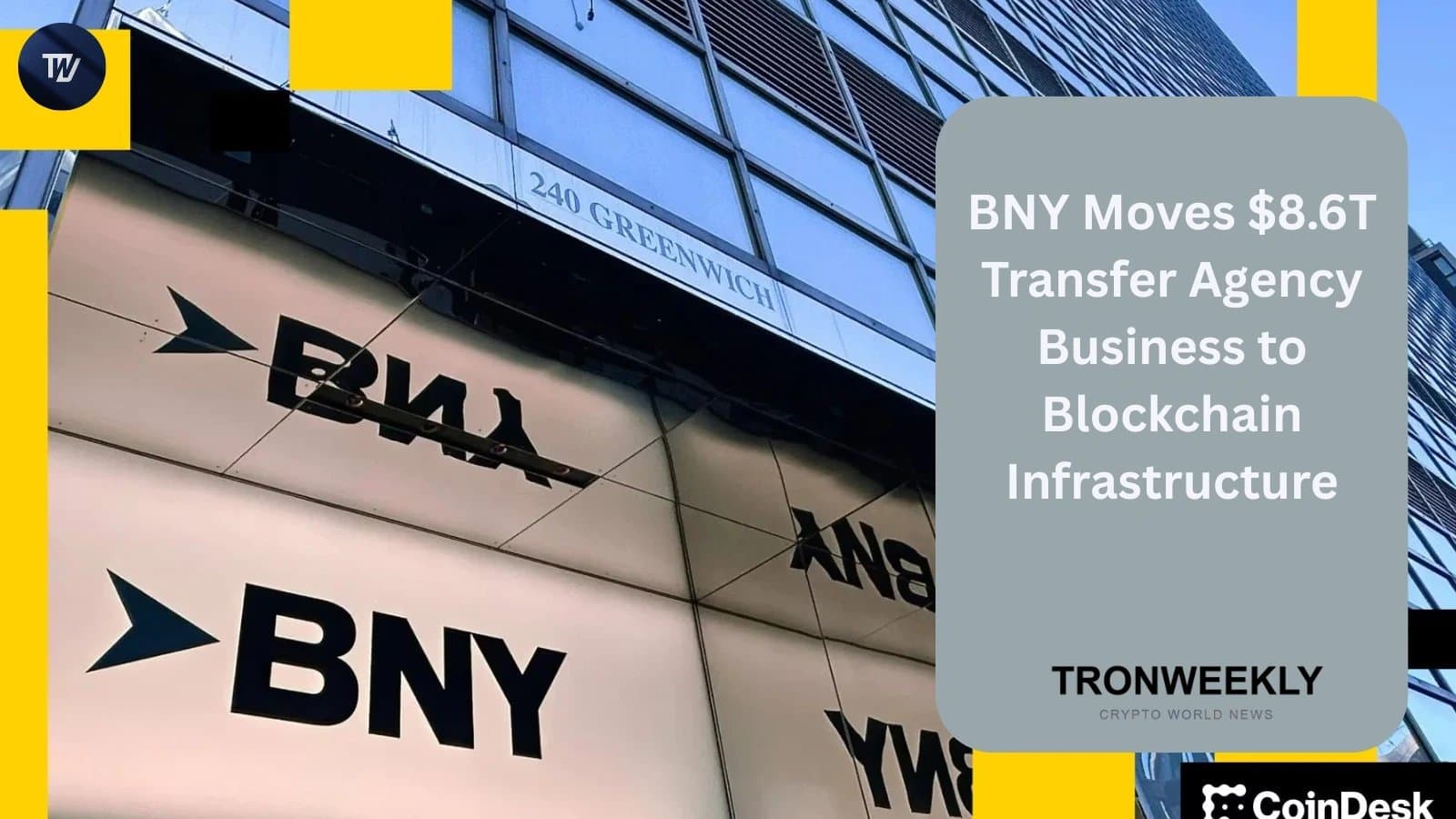
BNY Mellon, a 242-year-old titan in financial services, is reshaping a core Wall Street function by moving its transfer agency operations onto a blockchain system. The twist lies in maintaining its traditional setup while introducing a cutting-edge platform capable of managing $8.6 trillion in assets belonging to 7.6 million clients. This hybrid approach is an unprecedented step toward real-time, transparent, and unified recordkeeping for investment funds.
Streamlining Fund Recordkeeping with Blockchain
Transfer agents are responsible for tracking fund ownership, processing purchases and redemptions, and updating shareholder records. Historically, these duties involve juggling multiple disconnected databases across fund managers, custodians, and brokers. This fragmentation causes costly and time-consuming reconciliation cycles.
BNY Mellon’s blockchain platform consolidates these records into a single, immutable ledger. Carolyn Weinberg, the bank’s Chief Product and Innovation Officer, highlighted that digitizing these records on-chain could revolutionize fund transactions by enhancing efficiency and transparency. The platform aligns with recent regulatory progress, including the European Union’s Markets in Crypto-Assets (MiCA) framework, signaling growing institutional confidence in blockchain-driven finance.
Institutional Backing Fuels Tokenized Fund Launches
BNY Mellon plans to roll out the blockchain transfer agent service initially to its largest institutional customers. Baillie Gifford, managing $261 billion in assets, intends to launch the first UK-regulated tokenized fund using this infrastructure. Meanwhile, BlackRock and Dreyfus are preparing to introduce investment products that use the digital transfer agent’s capabilities.
The growing interest from asset managers reflects the increasing adoption of tokenized financial products, following earlier ventures by firms like Franklin Templeton. Theo Golden, head of Baillie Gifford’s Digital Assets team, pointed out that blockchain’s shared ledger reduces reconciliation costs by providing a single source of ownership truth accessible to all market participants.
This development complements Morgan Stanley’s recent moves into tokenized assets, such as its Ethereum and Solana crypto products, signaling a broader industry shift toward 24/7 markets and digital asset integration.
This material is informational and not financial advice.