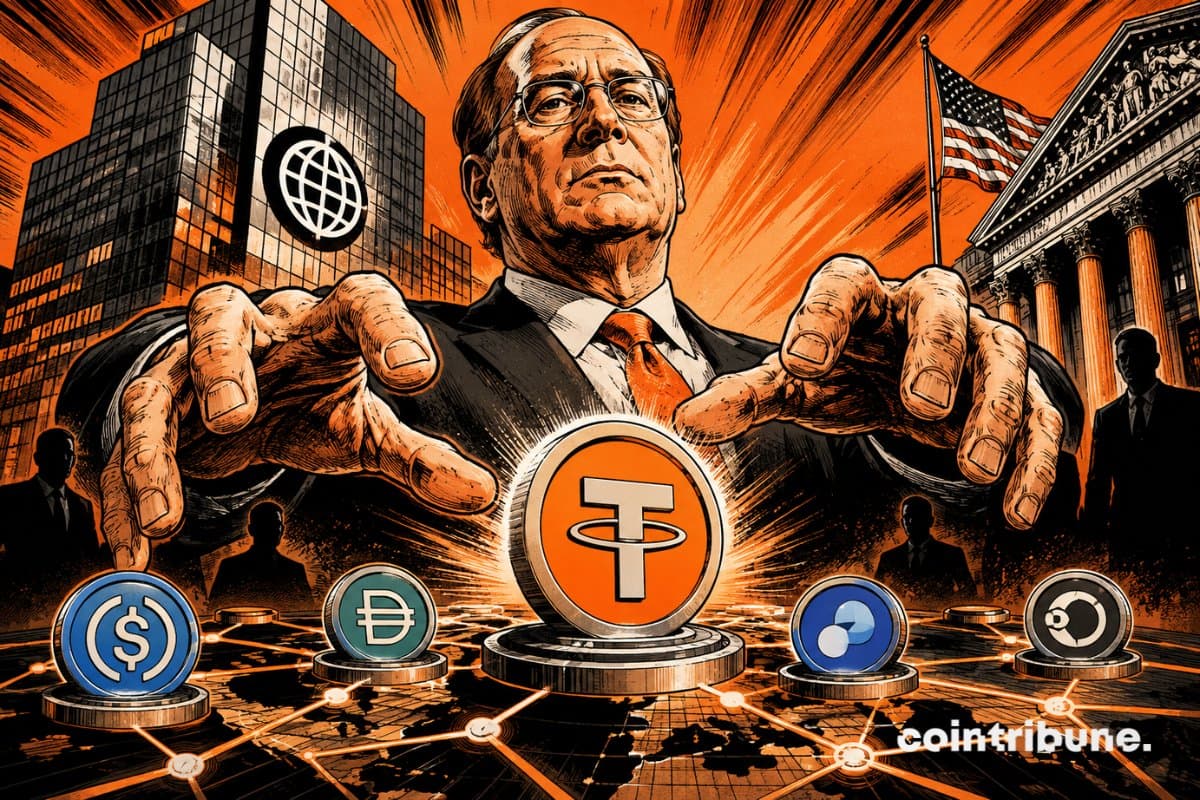
BlackRock just dropped two tokenized money market funds onto Ethereum and other blockchains. On the surface, that sounds like a boring asset-management move. Look closer and you see what's actually happening: Wall Street's biggest player is building the infrastructure layer that stablecoins need to stop being seen as casino chips.
The funds launched August 3, 2026. BSTBL (BlackRock Select Treasury Based Liquidity Fund OnChain Shares) sits on Ethereum, holding short-term US Treasuries and cash. BRSRV (BlackRock Daily Reinvestment Stablecoin Reserve Vehicle) spans multiple blockchains and reinvests dividends daily. Both are explicitly designed to serve as reserve backing for stablecoin issuers under the GENIUS Act, which took effect in July 2025.
The stablecoin market is contracting harder than it has since Terra blew up. But that's exactly when institutions move in. They don't want speculation to drive the market anymore. They want rules, standards, licensed custodians. BlackRock knows that whoever builds the boring infrastructure wins the long game.
From Speculation Layer to Plumbing
Until now, stablecoin reserves lived in a grey area. Some issuers stashed collateral in opaque vehicles. Others moved it around. The GENIUS Act changed that. It says if you want to issue a stablecoin that claims to be pegged to the dollar, your reserves have to come from approved sources. Treasury-backed funds qualify. BlackRock's two new products are built to hit that target.
BSTBL reuses an existing share class of BlackRock's Select Treasury Based Liquidity Fund. Institutional investors can move tokenized shares between wallets on Ethereum. BNY Mellon handles the behind-the-scenes work: custody, transfer agency, tokenization. For BRSRV, Securitize took the tokenization contract. It's open to institutions only and designed specifically for digital-asset use cases.
Neither fund is a bet on crypto getting bigger. They're a bet that crypto stops being wild and starts being infrastructure. The BUIDL fund, BlackRock's earlier tokenized product, already holds over $2.6 billion. That's not venture-capital money. That's institutions treating this as a utility.
What Changes for Stablecoin Issuers
A stablecoin issuer can now put customer deposits into BSTBL or BRSRV instead of into their own balance sheet or some private reserve vehicle. The issuer gets regulatory clarity. Customers get the knowledge that their dollars are backed by Treasury securities held by the world's largest asset manager. BlackRock gets fees and a foothold in digital finance.
This reshapes the competitive map. Smaller stablecoin issuers that don't have their own treasury operations now have a path to scale. Larger ones that already run reserves might look at BlackRock's fees and decide whether their current setup justifies the cost. The GENIUS Act gave them the legal framework. BlackRock just gave them the easy button.
The irony is sharp. Crypto was supposed to remove middlemen like BlackRock. Instead, they're now the middleman that makes crypto work inside regulated systems. That's not a bug in the story. It's the story.
This is informational content only and should not be treated as financial advice or an investment recommendation. Crypto markets carry significant risks, including regulatory changes and institutional shifts.