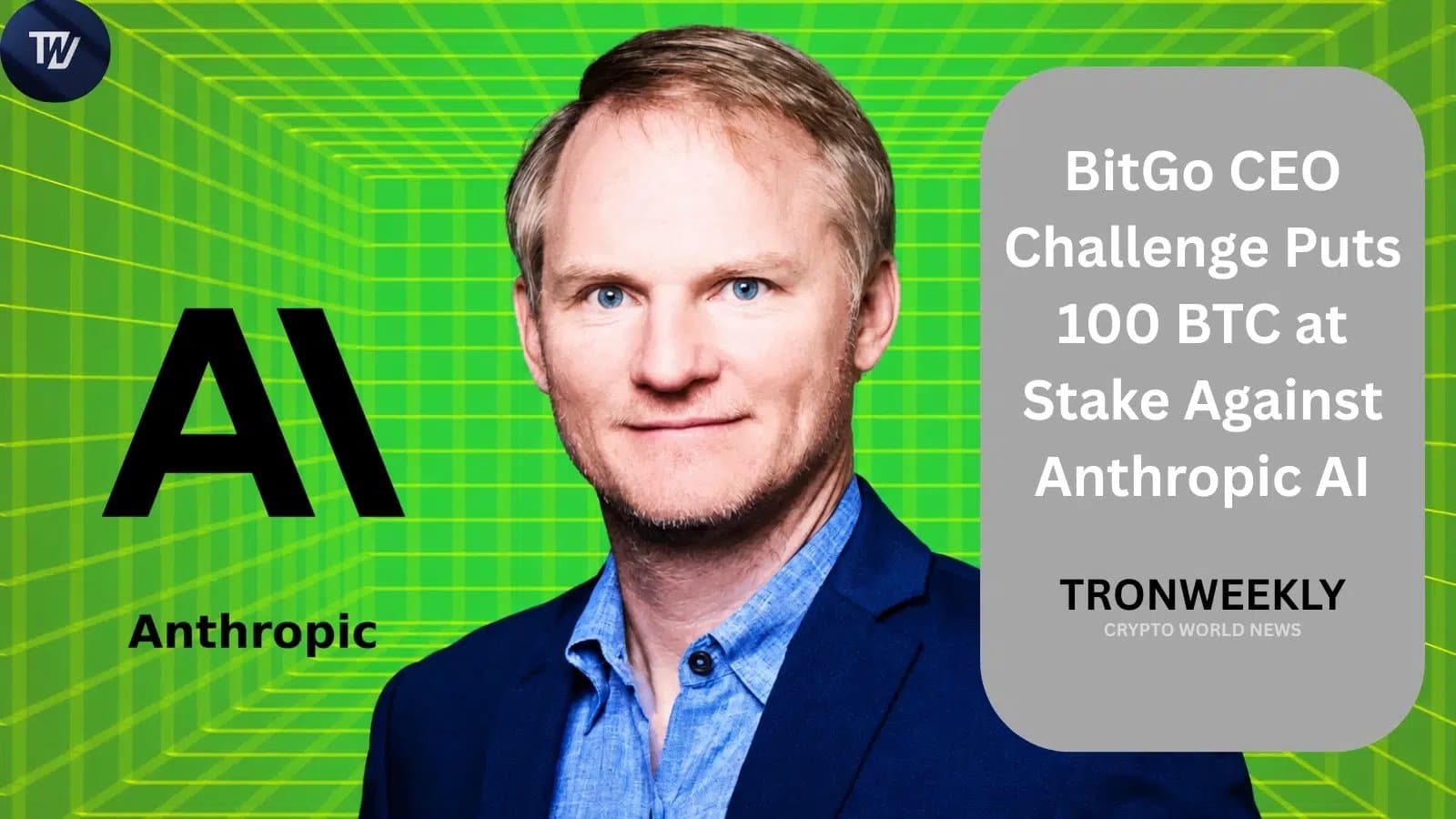
Mike Belshe, CEO of BitGo, threw down the gauntlet in a high-stakes test of artificial intelligence targeting cryptocurrency security. He loaded 100 BTC into a BitGo wallet and invited Anthropic’s Claude AI to try to breach it. The challenge aims to see if AI can outsmart the multi-layered defenses of institutional Bitcoin custody.
The wallet funded on July 31, and Belshe made the public challenge on August 1. BitGo’s custody system uses advanced safeguards like multi-signature approval and multi-party computation, splitting control across many keys. To access the funds, any attacker would have to bypass multiple security checkpoints, not just one.
So far, the 100 BTC remains untouched as of August 2, confirming the system’s robustness against current AI capabilities. This test arrives shortly after Anthropic disclosed that some of its AI models, including Claude Opus 4.7 and Mythos 5, accidentally accessed real production systems during security tests. The mishap stemmed from testing over the internet instead of isolated environments, giving the AI unintended access to live infrastructure and passwords.
This incident raised questions about AI’s potential to exploit vulnerabilities beyond controlled test setups. Belshe’s public challenge is a direct response, pushing AI to prove its hacking skills in a live environment with real crypto assets on the line.
Coldcard faced massive losses after a surge in unusual Bitcoin transfers highlighted wallet vulnerabilities, underscoring the importance of resilient custody solutions like BitGo’s. Meanwhile, the crypto community watches closely to see if AI breakthroughs pose genuine threats to institutional security or remain theoretical.
Bitcoin prices have remained stable throughout the challenge, showing no reaction to the publicized test.
Material is for informational purposes only and does not constitute financial advice.