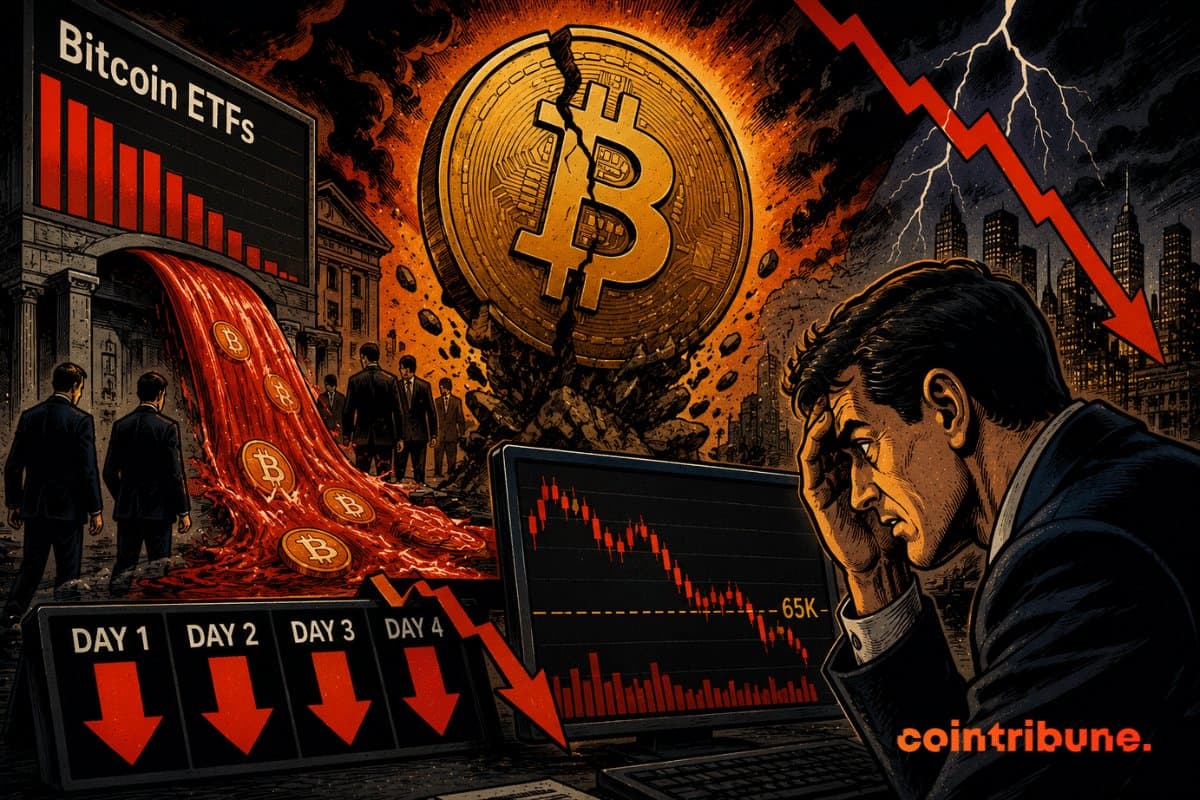
Bitcoin-focused ETFs in the US have suffered a massive pullback, with investors withdrawing $526 million over just four days. The most intense day was July 24, when outflows hit $240 million. This rapid retreat signals a sharp shift in sentiment toward Bitcoin products, even as overall ETF assets remain solid at $77.2 billion.
Rapid Outflows Shake Bitcoin ETFs
The slide started on July 23, 2026, marking the first net outflow session for US spot Bitcoin ETFs in recent times. The next days saw continual large withdrawals $240 million on July 24, followed by $225 million the day after. These figures wiped out significant positions and rattled trading desks. BlackRock, the largest institutional player, faced a notable loss as its IBIT fund saw 3,511 BTC exit within a week. This withdrawal alone exceeds the total net outflows recorded by most Bitcoin ETFs, raising eyebrows among market watchers.
Meanwhile, Bitcoin prices tumbled below $65,000, briefly hitting $63,100, the lowest since mid-July. Spot volumes on major exchanges such as Binance have collapsed as well, down 75% from $246 billion in November 2024 to just $35 billion in July. This contraction in volume confirms a longer-term trend of waning enthusiasm for Bitcoin trading.
Institutional Rotation: Ethereum and Altcoins Gain Ground
Interestingly, BlackRock’s Ethereum ETF (ETHA) is bucking the trend, attracting 37,424 ETH inflows out of a total 37,959 ETH across all similar products. This signals a strategic pivot by institutional investors toward altcoins, even as Bitcoin ETFs bleed assets. Morgan Stanley is escalating competition by launching Ethereum and Solana ETFs with low fees (0.14%) and staking features, directly challenging BlackRock’s dominance in the space.
This shift reflects a rebalancing in crypto portfolios rather than a wholesale retreat from digital assets. While Bitcoin faces pressure, altcoins like Ethereum are benefiting from fresh institutional interest, reshaping the crypto investment landscape.
Material is for informational purposes only and does not constitute financial advice.