July 22, 2026. Bitcoin is back at $65,134, optimism is up, and some analysts are already penciling in targets well above last year's $126,000 record. Not so fast.
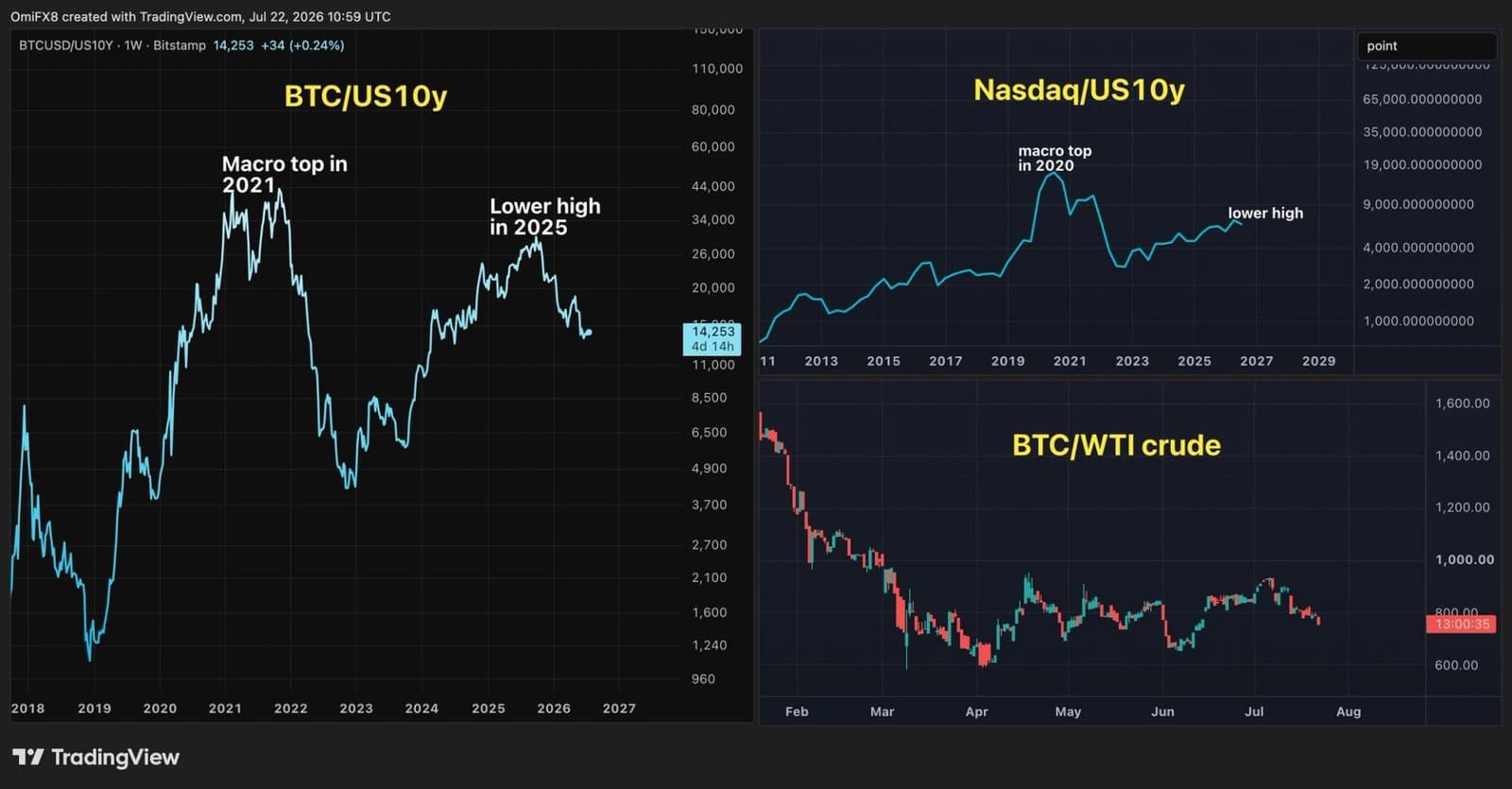
When you adjust BTC prices for the cost of capital, specifically the U.S. 10-year Treasury yield, the picture looks a lot less euphoric. The BTC/US10Y ratio has never taken out its 2020-2021 peak, even though the dollar price of bitcoin set new all-time highs over the past year.
The same is true for the Nasdaq. In yield-adjusted terms, the real macro top for both bitcoin and the broader tech sector was probably back in 2021, not in 2025.
That gap between nominal prices and yield-adjusted valuations has to close somehow. Either rates fall sharply, which compresses the denominator and pushes those ratios to new highs, or dollar prices drop to catch down with the structural weakness the ratios are already showing.
Right now, the second option looks more likely. Fed officials have kept their tone hawkish, and some have even floated the idea of rate hikes rather than cuts.
Oil is making things messier. Bitcoin bounced from $58,000 to $66,000, which sounds decent until you notice the BTC/WTI crude ratio actually fell during that move. Oil is outrunning even the most aggressive risk assets, which points toward a fresh round of cost-push inflation building in the background.
If crude keeps climbing, the adjustment could be abrupt: nominal prices snapping lower to realign with where yield-adjusted metrics have been sitting all along.
Elsewhere, the Crypto Clarity Act remains stuck in the Senate. Democrats are pushing back on language that would restrict government officials from holding significant crypto positions. And Movement Labs filed for Chapter 11 bankruptcy, months after the token scandal that first put the project under scrutiny.
This article is for informational purposes only and does not constitute financial advice or an investment recommendation.