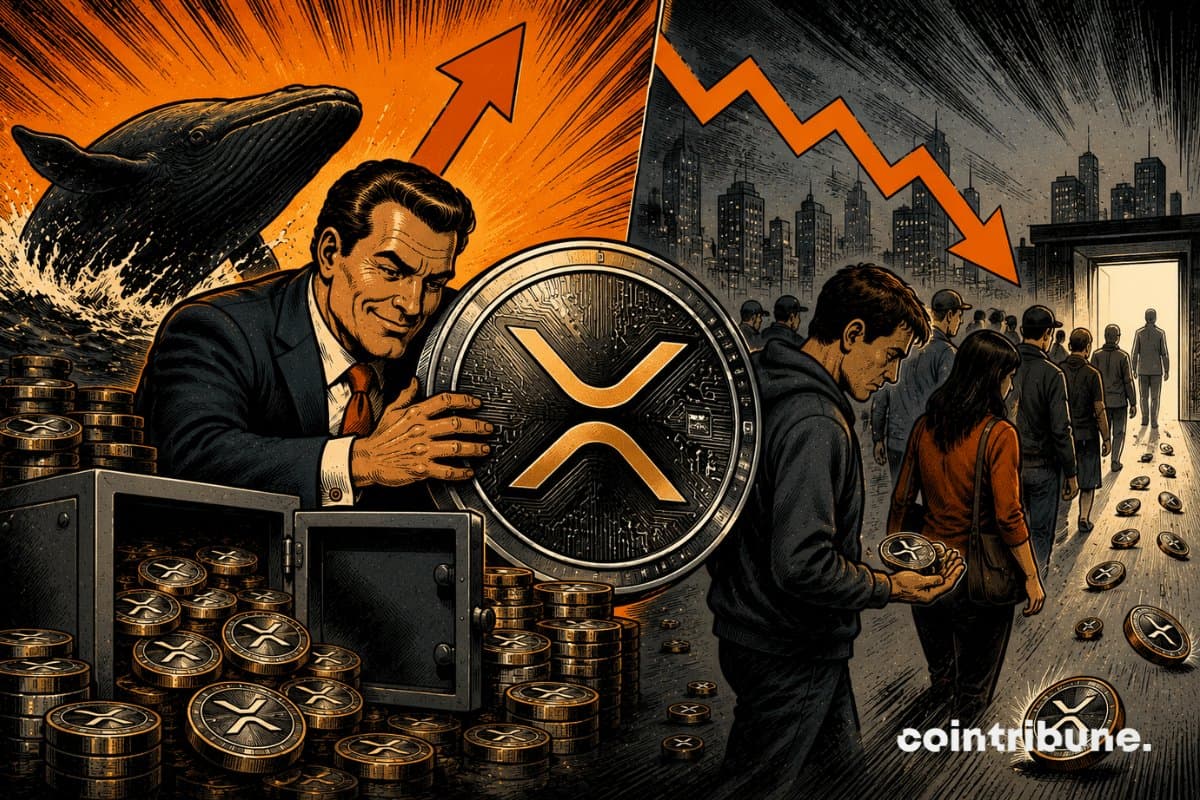
When the price of XRP climbed past $1.16 recently, a clear divide appeared among investors. Small holders started selling off their tokens, reducing their stakes by about 5.2% over five weeks. Meanwhile, the largest holders, often called whales, quietly increased their positions by nearly 3%. This shift is more than just numbers it shows a transfer of XRP from less confident retail traders to stronger, wealthier players.
The smallest wallets on the Ripple network seem to be giving up, likely due to market jitters and volatility. Data from Santiment reveals that these retail investors are selling to avoid further losses or to switch to what they see as safer assets. This wave of selling has dumped a significant volume of XRP onto the secondary market. Such moves usually signal a phase where short-term investors exit, clearing the path for long-term holders to take control.
On the other side, whales holding between 100,000 and 100 million XRP have been steadily adding to their holdings. Their buying helped push XRP up from around $1 to $1.16 in just over a month. This strategic accumulation tends to happen when confident investors see value and expect a price rebound. It’s a pattern observed before in the crypto space where large players capitalize on retail capitulation to strengthen their grip.
This dynamic between small and large holders hints at upcoming market movements. As weaker hands exit, the concentration of XRP in the hands of whales usually leads to a more stable price or even a rally. The recent price rebound aligns with these on-chain trends, showing that the market is quietly repositioning itself.