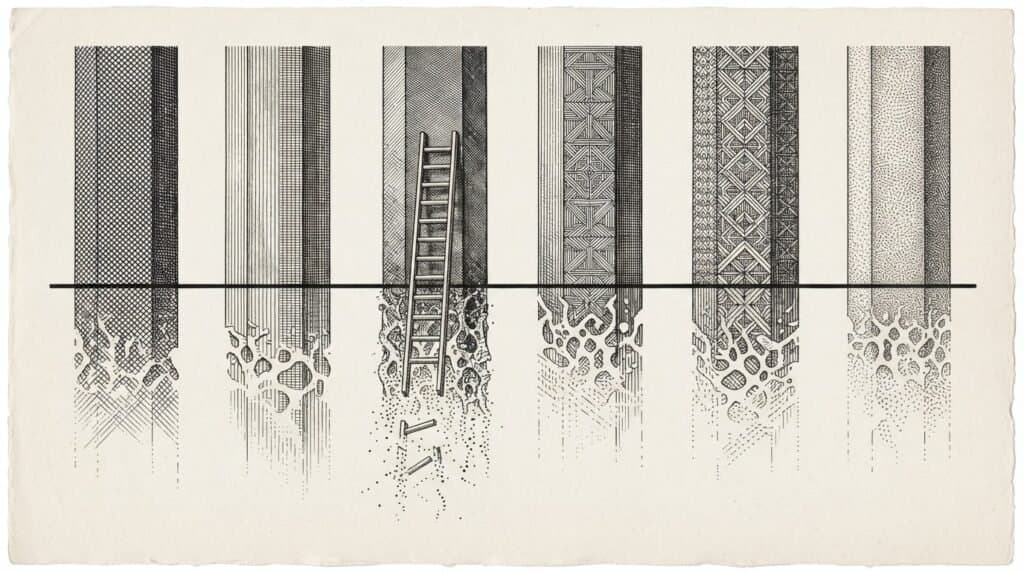
BCG Henderson Institute’s latest study breaks down how AI will reshape the US workforce with a sharp focus on specific job roles. Their analysis covers 165 million positions spread over 1,500 distinct roles, uncovering that 43% of these jobs have a task automation potential above 40%, marking a key threshold for businesses to reconsider how work is organized.
Rather than falling into extremes either believing AI will solve all productivity issues or fearing it will wipe out jobs the report introduces a nuanced framework. It categorizes roles into six segments based on two key factors: how much of the role’s tasks AI can automate and whether demand for the role is expected to grow or shrink.
Six Segments Defining AI’s Workforce Impact
On one side are Limited-Exposure roles, comprising 34% of the workforce, which rely heavily on human judgment and relationships, making them tough for AI to replace. At the opposite end, Substituted roles (12%) face capped demand and high automation risk, often leading to job losses and wage pressure. Between these extremes are four other categories:
- Amplified (5%) where AI boosts productivity and demand rises,
- Rebalanced (14%) involving roles redesigned with higher skill requirements,
- Divergent (12%) where entry-level tasks get automated but senior positions grow,
- Enabled (23%) where AI integrates into daily tasks without reducing job numbers.
The 40% automation potential line is more than a statistic it signals when companies must stop treating AI as an add-on and start overhauling job design. However, the study highlights that AI-driven augmentation often precedes substitution by several years, giving businesses time to adapt gradually.
This granular view helps employers move beyond vague assumptions to strategize hiring, training, and organizational redesign more effectively. It also cautions that broader economic factors aren’t part of this model, so real-world outcomes could shift.
This material is for informational purposes only and does not constitute financial advice.