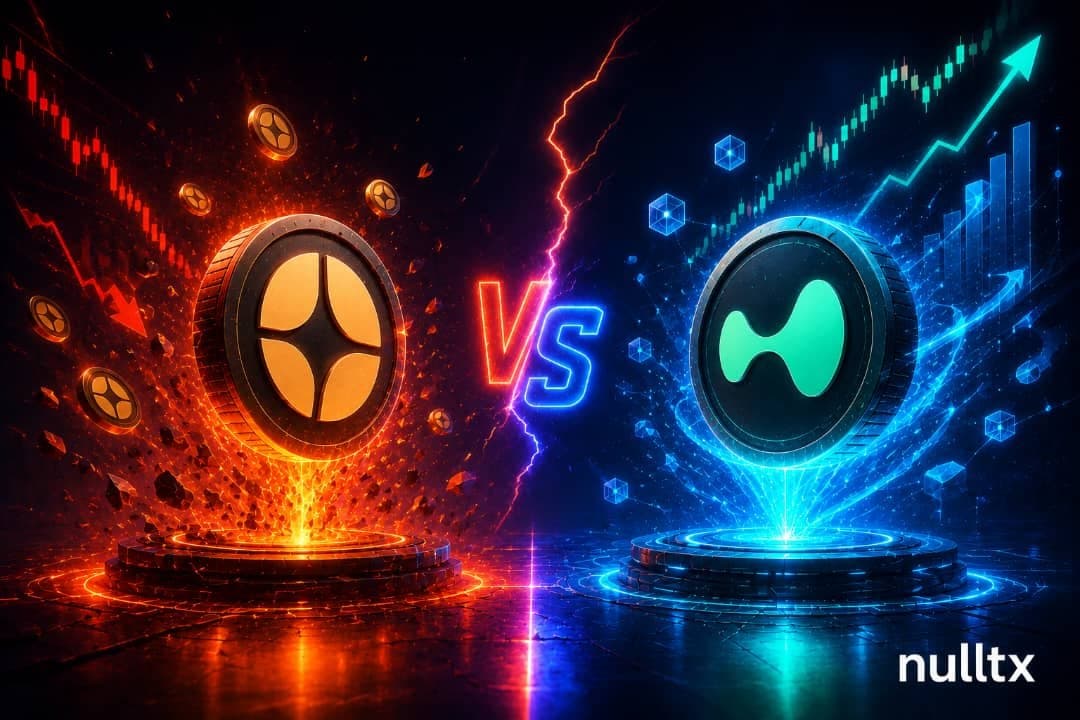
Aster spent two weeks buying back and incinerating its own tokens, and the market shrugged. Between June 29 and July 13, the project used 99% of its daily platform fees to repurchase 3,083,815.69 ASTER for stakers, then burned an identical amount from the team allocation. The transaction is visible on-chain. Since the tokenomics upgrade launched on June 17, the cumulative burn under the new structure reached 6,020,941.22 ASTER. Total burn across all programs the project has ever run now sits at 183,801,942.79 ASTER.
Those are large numbers. The mechanism is also transparent: real fee revenue funds the buyback, and the team burns a matching slice of its own allocation. That signals alignment with stakers, at least on paper. Staking APY currently runs at 5.35% for a 26-week lock and stretches to 28.85% for the maximum 208-week commitment, though both figures vary.
Supply shrinks, demand stays flat
Here is the problem. A burn reduces the denominator. It does nothing to grow the numerator. If new capital is not entering the ecosystem fast enough to match or outpace the burn, price impact stays marginal regardless of how impressive the cumulative total looks. Locking tokens for four years in exchange for a 28.85% yield appeals to a narrow group of long-term stakers. It does not create new use cases or pull outside money into the ecosystem. Aster is tuning the supply side of its own token while the platform's underlying economic activity remains comparatively unchanged. That gap is the whole story.
Hyperliquid, meanwhile, hit an $11 billion open interest peak, driven in part by its expansion into real-world assets. That kind of volume reflects actual institutional capital moving through the platform, not a mechanical reduction in token supply. The difference matters: organic platform utility generates demand that feeds price, while artificial scarcity just removes tokens that were already sitting idle.
The contrast between the two projects is a useful lens for where on-chain capital is actually heading right now. Aster's burn numbers will keep growing. ASTER's price, without a parallel surge in platform activity, has no structural reason to follow.
ASTER traded flat in the hours after the latest burn announcement; HYPE held near recent highs.
This article is for informational purposes only and does not constitute financial advice or an investment recommendation.