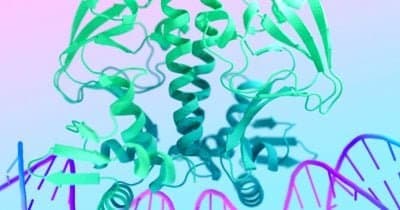
Imagine gene-editing tools that can change DNA with laser-like accuracy, avoiding mistakes that could cause serious harm. That's what a new AI approach called ContactSeek is aiming for by using Google DeepMind's AlphaFold3, the cutting-edge AI that maps protein structures.
Gene editing often stumbles on a big problem: the molecular scissors sometimes cut the wrong DNA, risking unintended effects. ContactSeek tackles this by predicting how the gene editor physically interacts with DNA, then tweaking the editor’s structure for better precision. It uses AlphaFold3's detailed protein folding predictions to see exactly where the editing protein grabs the DNA, letting scientists swap out specific parts that cause sloppy editing.
The researchers tested this on adenine base editors derived from the Cas9-TadA system. Their refined editor had only two mutations but showed much higher accuracy and efficiency than existing high-fidelity versions. The approach proved flexible, too, working on a different editor type based on LbCas12a that targets cytosine. Plus, all the code and data are openly shared on Zenodo and GitHub, inviting others to build on this.
Gene therapy has moved from the lab to real patients, but safety concerns about off-target DNA cuts still slow approvals for new treatments. ContactSeek’s AI-driven method can shorten development times by reducing trial-and-error in protein engineering. This could accelerate safer treatments reaching the clinic.
Biotech investors have a new signal to watch: AI isn’t just automating research; it’s rewriting the rules of protein design, potentially transforming gene therapy’s future and the companies working on it.