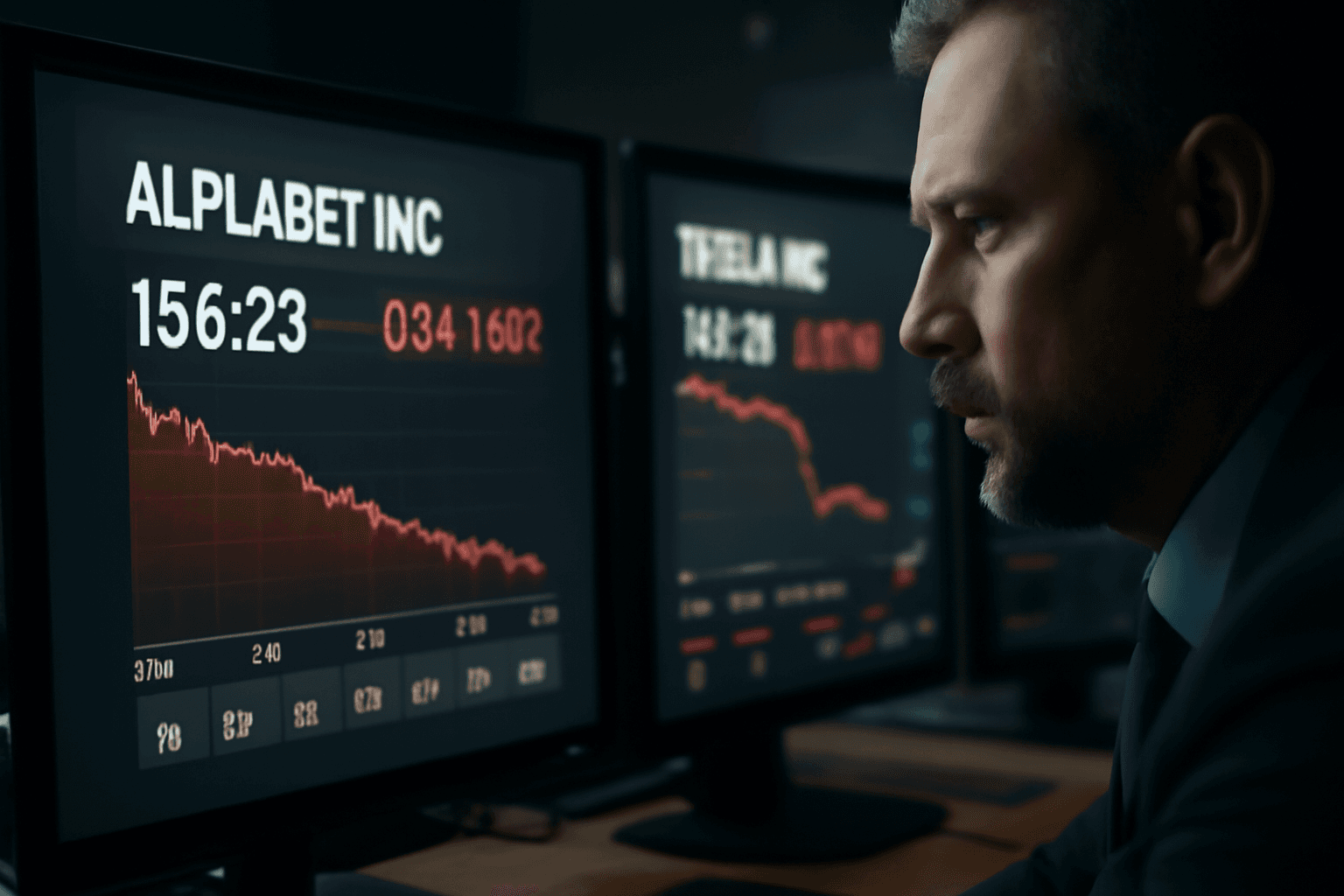
Thursday's earnings from Alphabet and Tesla rattled markets hard, sending the Nasdaq down 2.8% to around 24,975, with the S&P 500 off 1.5% and the Dow losing 1.2%.
Alphabet's Q2 revenue came in at $119.8 billion, beating the $116.9 billion consensus, and Google Cloud surged 82% year-over-year to $24.8 billion. None of that mattered much once investors saw the capex line: $44.9 billion in a single quarter, double the figure from a year ago and enough to push operating cash flow of $39.1 billion into negative free cash flow territory. That has never happened before in the company's history. Management then raised full-year capex guidance to $195-205 billion, up from $180-190 billion, and flagged that 2027 spending would climb even further. CEO Sundar Pichai called AI investment "redefining what's possible across every part of our business." The stock fell more than 7%.
Tesla's margin miss added fuel to the fire
Tesla delivered 480,126 vehicles in the quarter, topping estimates, but automotive gross margin came in at 16.3% against an expected 18.04%. Capital expenditures jumped 142% to $5.8 billion as the company accelerates robotaxi and AI development. Elon Musk told analysts the spending would pay off. Investors cut the stock by 13.5% anyway.
The selloff spread fast. Amazon dropped nearly 5%, Meta lost close to 4%, and Microsoft slid more than 2%. This pattern of cloud and tech giants burning through cash faster than they generate it is becoming a recurring concern on Wall Street. Some industry analysts now warn that combined capex from the five largest tech companies could outpace their free cash flow generation by 2027, a scenario that puts real pressure on valuations built around AI monetisation timelines.
This article is for informational purposes only and does not constitute financial advice or an investment recommendation.