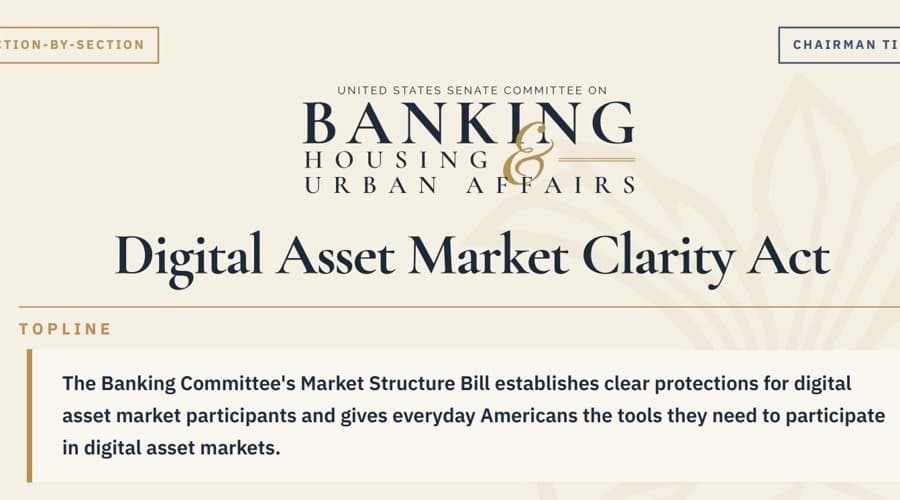
A coalition of 78 banking groups fired off a letter to Senate leaders on July 13, days before a July 17 hearing on the CLARITY Act, demanding tighter restrictions on how payment stablecoin issuers can reward users. The American Bankers Association led the charge, joined by the Independent Community Bankers of America and dozens of state associations.
What the banks actually want changed
The groups zeroed in on Section 404 of the bill, which governs stablecoin rewards. Their core complaint: the current draft only bans returns paid "solely" for holding stablecoins. That single word, they argue, leaves a wide enough gap for issuers to bundle holding-based rewards with activity-based incentives and stay technically compliant while achieving the same economic result.
The fix they propose is blunt. Drop "solely" from the text entirely. They also want the existing "economically or functionally equivalent" test replaced with a stricter "substantially similar" standard, which would give regulators less room to interpret around the edges. On top of that, the coalition wants to narrow language that currently preserves certain platform-based rewards, arguing that any stablecoin product offering passive returns is already competing with a savings account in everything but name.
The deposit flight argument, and who it hits
Banks frame this as a systemic risk question, not a turf war. Lower deposit balances mean less funding available for mortgages, small-business loans and agricultural credit, they wrote. "We remain concerned that ambiguities within the bill could encourage stablecoin arrangements to effectively function as substitutes for deposits."
If the amendments pass, regulated issuers like Circle and Paxos would find it significantly harder to offer yield-like rewards that can compete with offshore crypto platforms operating outside US oversight. The practical effect would push stablecoins further toward their original pitch: payment rails, settlement infrastructure, reserve management, transfers. Revenue would flow from those functions rather than from user-facing reward programs.
The proposals are now folded into a broader Senate debate that also covers market structure and oversight provisions. The July 17 hearing will be the first real test of how much appetite lawmakers have for drawing a hard line between stablecoins and deposits.
This article is for informational purposes only and does not constitute financial or investment advice.